


Asmita Mukherjee | Hyderabad
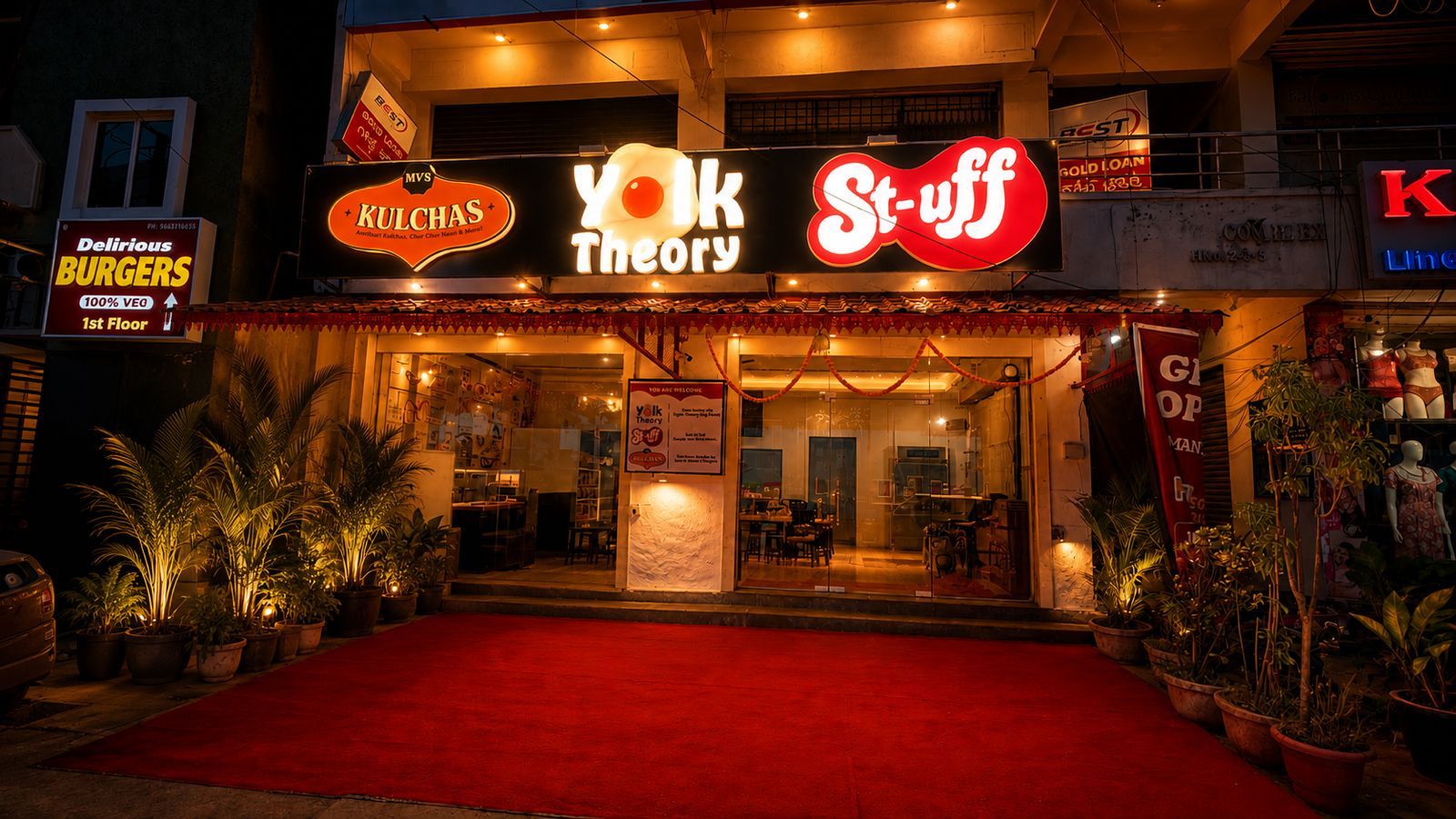
As Hyderabad’s food and beverage landscape becomes increasingly crowded, restaurant operators are being forced to think beyond menus and locations. For Stuff Foods LLP, the strategy revolves around identifying untapped consumer segments, creating differentiated concepts and building a scalable backend that can support rapid expansion. Founded by Sandeep Kintali, Co-Founder, Stuff Foods LLP, and Ankit Patel, Founder & Managing Partner, Stuff Foods LLP, the company has built a multi-brand portfolio comprising Yolk Theory, Stuff Idli, and Kulchas, each catering to a distinct consumer need while operating within a common ecosystem of operational efficiency and innovation.
“Kulchas has been part of our journey for over five years and has already established itself successfully in Gujarat. Bringing that model to Hyderabad was a natural progression after witnessing strong customer acceptance,” says Kintali.
The company’s newer concepts, however, were born in Hyderabad. “Stuff Idli and Yolk Theory were conceptualised here. Our vision is to expand Stuff Idli aggressively across North India while strengthening Yolk Theory and Kulchas across South India, particularly Hyderabad,” he adds.
Creating a Category Around Eggs
Among the portfolio brands, Yolk Theory addresses what the founders identified as a significant gap in the market.
“We realised Hyderabad lacked a dedicated egg-focused QSR brand offering extensive variety. Today, Yolk Theory serves more than 90 egg-based dishes inspired by concepts we explored across Gujarat and other markets, while adapting them to local preferences,” explains Kintali.
The concept emerged from a combination of market observation and entrepreneurial collaboration.
“Ankit comes from Ahmedabad and I am from Hyderabad. During our travels, we noticed cities like Surat have a vibrant egg-food culture with tremendous variety, something largely absent in South India. At the same time, eggs remain one of the most affordable and natural sources of protein and healthy fats. We saw an opportunity to combine nutrition, affordability and great taste within one brand,” he says.
As consumer demand for protein-rich food continues to rise, the founders believe Yolk Theory is uniquely positioned within the evolving QSR landscape.
Building Beverage-Led Experiences
Beyond food, Stuff Foods is investing in beverage innovation as a future growth pillar.
“We are developing South Indian-inspired beverages such as Hibiscus Rasam Cooler and traditional temple-inspired drinks. The idea is to create products that are refreshing, rooted in regional flavours and aligned with wellness trends,” says Patel.
According to him, these products have the potential to evolve beyond restaurant consumption and eventually become standalone retail offerings.
Freshness as a Business Philosophy
Across all three brands, freshness remains a central operational principle.
“Whether it’s egg dishes at Yolk Theory, South Indian offerings at Stuff Idli or products served at Kulchas, freshness is non-negotiable. Consumers today expect consistency and reliability, and that’s what drives repeat business,” says Kintali.
To support this commitment, the company has invested significantly in backend infrastructure.
“We already operate a centralised kitchen and are planning another facility in Hyderabad. This allows us to standardise gravies, masalas and critical ingredients while ensuring the same taste and quality across every outlet,” he explains.
The Role of Robotics in QSR Operations
Perhaps one of the most interesting aspects of the company’s growth strategy is its focus on automation.
“We are actively working with a Hyderabad-based robotics company on research and development. The goal is not to replace people but to improve efficiency, standardisation and scalability,” says Patel.
Food businesses often struggle to maintain consistency across multiple locations, he notes. “Robotics can help replicate recipes accurately and reduce operational dependency on individual kitchen staff. Technology will play a significant role in the future of QSR operations.“
The initiative also addresses one of hospitality’s most pressing concerns.
“Post-pandemic, manpower management has become increasingly challenging. Automation can improve efficiency behind the scenes, while human interaction will always remain essential for guest service and hospitality,” he adds.
Moving Towards Induction-Based Kitchens
The company has also embraced commercial induction technology across most of its operations.
“Rising LPG costs and supply disruptions encouraged us to explore alternative cooking technologies. Today, the majority of our kitchens operate on commercial induction systems, which provide efficiency while reducing dependence on traditional fuel sources,” says Kintali.
A Roadmap to 100 Outlets
Stuff Foods LLP has outlined ambitious plans to scale its footprint significantly over the next few years.
“Our goal is to reach 100 outlets within the next two to three years through a mix of company-owned and franchise-operated formats,” says Patel.
Interest from potential franchise partners has already begun to materialise, but the founders insist that expansion will remain disciplined.
“We are not chasing numbers for the sake of growth. The focus is on creating a scalable and sustainable business model that protects quality and customer experience,” he says.
To ensure consistency, franchise locations will remain closely integrated with the company’s supply chain.
“Key ingredients, masalas and critical supplies will be sourced through our centralised ecosystem. Whether an outlet is in Hyderabad, Delhi, Chennai or any other city, customers should experience the same taste and quality,” says Kintali.
Competing in Hyderabad’s Dynamic F&B Market
With areas such as Kondapur and Manikonda witnessing an influx of new restaurants and cafés, competition continues to intensify. Yet the founders see opportunity rather than threat.
“Hyderabad is one of India’s most exciting food markets. Consumers are constantly looking to try something new. However, long-term success ultimately comes down to consistency, service and product quality,” says Patel.
For Stuff Foods LLP, the differentiator lies in balancing creativity with operational discipline.
“Whether it’s Yolk Theory’s extensive egg-based menu, Stuff Idli’s contemporary take on South Indian cuisine or Kulchas’ proven appeal, each brand offers something unique. What unites them is our focus on freshness, consistency, technology and customer experience,” he concludes.
As India’s organised QSR sector evolves, Stuff Foods LLP is betting that innovation backed by strong systems will define the next phase of growth.