


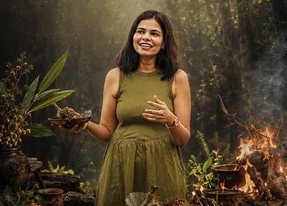
Luxury hotels today are moving beyond conventional regional food festivals to curate experiences that celebrate India’s lesser known culinary heritage. At Permit to Grill in Novotel Hyderabad Convention Centre (NHCC), Forest & Fire is one such initiative. Curated by culinary explorer, food entrepreneur and founder of Prana Superfoods, Chef Harshita Kakwani, the limited period festival shines a spotlight on the indigenous food traditions of Central India. More than introducing diners to unfamiliar dishes, it revives recipes, ingredients and cooking techniques that have nourished forest communities for generations, long before sustainability entered mainstream conversations.

The menu celebrates indigenous ingredients, seasonal cooking and recipes preserved by tribal communities of Central India, reminding diners that some of India’s oldest food traditions may also hold answers to the future of sustainable eating.
Forest Calling
For Chef Harshita Kakwani, the journey into indigenous cuisine began during her initial years managing a wildlife resort near Pench National Park. Living alongside tribal communities gave her access to culinary knowledge that is rarely documented.
“Forest food goes much further back than traditional food. It belongs to the time when people lived as hunters and gatherers and ate what nature offered according to the season. Many of these foods still exist, but we have forgotten them,” she says.
What started as curiosity slowly became documentation. Over the years, she recorded recipes, preservation techniques and seasonal ingredients that exist largely through oral traditions rather than written records.
The Hyderabad festival is an extension of that work. “The opportunity came by chance, but my mission has always been to take seasonal, local, tribal and forest based food across the country. This cuisine is an extension of what our ancestors ate, food that was deeply connected to nature.”
Wild Ingredients
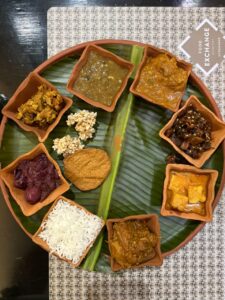 The menu is built around ingredients that are slowly disappearing from urban kitchens but continue to thrive in India’s forests and tribal households.
There is mahua, often associated only with traditional beverages, but used here in chutney, curry and even ice cream. Jamun, usually consumed as a seasonal fruit, finds a new identity in a savoury curry. Bamboo shoots, harvested young and naturally fermented in many tribal communities, bring earthy depth to the Bamboo Bhurji. The Ambadi leaves, commonly known as Sorrel or Gongura leaves, found a delightful expression in the Ambadi Patte Ki Chaat, a refreshing appetiser that celebrated the leafy green’s signature tang while elevating it into a flavourful chaat. Roselle leaves lend their natural tang to a comforting dal, while native grains like jowar, bajra and urad replace refined flour in rustic breads.
Several dishes also showcase ingredients such as til, greens, wild herbs and indigenous rice varieties that have sustained communities through generations without intensive farming or excessive irrigation.
Unlike commercially cultivated produce, many of these ingredients grow according to nature’s rhythm, making them naturally seasonal and environmentally resilient.
Authentic Flavours
The experience begins with a comforting bowl of Dal Farra, where rice dumplings and lentils come together in a light broth that reflects the simplicity of everyday tribal cooking.

The vegetarian thali offers some of the festival’s most memorable dishes. Bamboo Bhurji surprises with its texture and gentle acidity, while Jamun Ki Sabzi balances sweet, tart and savoury notes in a way few diners would expect. Roselle Ki Dal, Chimnor Rice, Urad Bajra Roti, Til Ki Chutney, Mahua curry and Mahua Ice Cream together create a meal that is unfamiliar yet comforting.
The non vegetarian thali follows the same philosophy with Gaon Wala Murg, Bastar Fish Curry, Jamun Ki Sabzi, Roselle Ki Dal and traditional breads such as Jowar Bajra Roti, Urad Dal Thadule celebrating robust flavours without relying on heavy gravies or excessive spices.
Chef Harshita recommends diners keep an open mind while trying the menu. “Seasonal dishes are always special. I would recommend Jamun Curry, Mahua Flower Curry, Indrahaar made with five lentils, Bamboo shoot preparations and dishes made with Mahua because these are rarely available in restaurants.“
Purpose Driven
Chef Harshita believes reviving indigenous cuisine is about much more than preserving recipes.
“Our changing food habits have affected both human health and the environment. Forgotten foods are nutritious, seasonal and environmentally responsible. Reviving them is about preserving knowledge and promoting healthier lifestyles.“
She also points out that the menu has not been altered to suit local tastes. “I prefer presenting the cuisine in its authentic form while offering a variety of flavours. Many dishes are naturally gluten free and rely on minimal spices because the ingredients themselves have distinct flavours.“
That confidence in authenticity is perhaps the festival’s greatest strength.
Future Plate
As hospitality brands continue to explore regional Indian cuisines, Forest & Fire demonstrates that the next frontier may well lie in indigenous food systems that have remained overlooked for decades. Chef Harshita believes travellers also have a role to play.
“Whenever you travel, make an effort to try local food instead of choosing familiar comfort meals. Supporting regional cuisines helps preserve recipes, indigenous ingredients and the communities that keep these traditions alive. Every local dish tells the story of its land, culture and people.“
At a time when menus across cities are beginning to look increasingly similar, Forest & Fire offers something refreshingly different. It celebrates biodiversity over uniformity, seasonality over convenience and knowledge passed down through generations over fleeting food trends.
Forest & Fire is on at Permit to Grill,Novotel Hyderabad Convention Centre, until July 26. The dinner buffet is available daily from 7pm to 11pm at INR 2,799++ per person, while the vegetarian and non vegetarian thalis are priced at INR 1,200++ and INR 1,400++ respectively. The festival will conclude with a Bar Takeover on July 25 between 6.30 pm and 8.30 pm, featuring an à la carte beverage experience inspired by indigenous ingredients.