


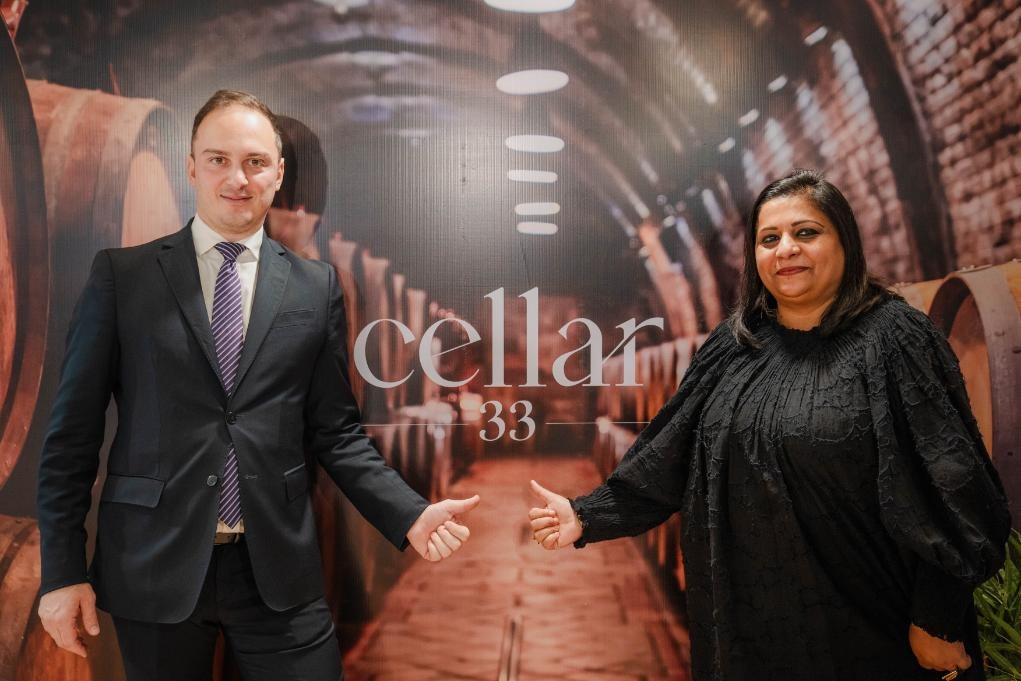
Cellar 33 is bridging the gap between global wine and spirits producers and India’s fast-evolving luxury hospitality market. Co-founded by Amrita Singh, (who is also the Co-Founder & President of Sommeliers Association of India) and renowned sommelier Mattia Antonio Cianca, the venture pairs luxury brand building with deep international trade expertise. In an exclusive chat with Asmita Mukherjee, the duo shares how they navigate India’s complex excise regulations and tap into HORECA growth.
How is Cellar 33 positioning itself in India’s competitive wine and spirits market, and what is its core business proposition?
Cellar 33 positions itself as a bridge between international wine and spirits producers and the evolving Indian market. Our core proposition is built around discovery, curation and connection. We work with producers who bring quality, authenticity, a distinctive story and a strong sense of identity, while helping them navigate the complexities of entering India and connecting with the right importers, distributors and hospitality partners. Beyond simply representing brands, we focus on creating visibility, facilitating meaningful business relationships and building long-term market opportunities. In a competitive landscape, our differentiation lies in combining deep industry experience, an understanding of luxury and lifestyle branding, and a strong international network to bring exciting new experiences to Indian consumers.
How have your complementary backgrounds in luxury, brand building and international wine service shaped Cellar 33’s business strategy?
Our complementary backgrounds have given Cellar 33 a unique perspective on the wine and spirits business. My experience in luxury, fashion and brand building has shaped our approach to positioning, storytelling, consumer aspirations and creating lifestyle-led experiences. Our international wine experience brings the technical knowledge, understanding of provenance, quality and producer relationships that are essential in this industry. Together, these perspectives have shaped a business that goes beyond simply bringing brands into India. We focus on carefully curating producers, understanding their identity, finding the right market positioning and connecting them with the right Indian partners. Our strategy is to combine the creativity and emotional appeal of luxury brand building with the credibility and expertise of the international wine trade.
What are the biggest growth opportunities in India’s wine and spirits industry, particularly across premium hospitality, restaurants and the HORECA segment?
We believe the biggest growth opportunity lies in the evolution of India’s hospitality and dining culture. As luxury hotels, premium restaurants, boutique properties and destination weddings grow, there is increasing scope for introducing more diverse and premium wine and spirits experiences. The HORECA segment is particularly important because it is where consumers discover new labels, learn about different regions and develop preferences. There is also enormous potential in wine-by-the-glass programmes, curated wine lists, Champagne experiences, premium gifting and food-and-wine pairings. However, the real opportunity goes beyond simply increasing consumption. It is about investing in education, training sommeliers and hospitality teams, and making wine more accessible and engaging. We believe brands, producers and hospitality partners who invest in creating experiences rather than just selling products will play an important role in shaping India’s premium wine and spirits market.
How are Indian consumers’ preferences for wine and premium spirits evolving, and how is Cellar 33 adapting its portfolio and offerings to these changes?
Indian consumers are becoming more curious, experimental and quality-conscious. There is a growing interest in discovering wines from different regions, exploring new grape varieties and styles, and understanding provenance and craftsmanship. We are also seeing premium spirits and Champagne becoming increasingly relevant as part of a broader luxury and lifestyle experience. Consumers are moving beyond familiar labels and looking for authenticity, distinctive stories and experiences. At Cellar 33, we are responding by continuously evolving our portfolio, bringing in producers who offer quality, character and differentiation across different price segments and categories. We are also focusing on creating greater awareness through tastings, trade interactions, education and stronger connections with the hospitality industry. Our aim is to offer discovery and choice while staying closely aligned with the changing aspirations of the Indian consumer.
With established importers, distributors and emerging wine businesses competing for market share, how does Cellar 33 differentiate itself and build a sustainable competitive advantage? Do you have plans for B2B tie-ups ups?
Cellar 33 differentiates itself through its highly curated international network, deep understanding of brand building and a strong focus on creating meaningful connections between overseas producers and the Indian wine and spirits industry. We don’t see ourselves simply as another importer or distributor; our role is to understand a producer’s identity, identify the right market opportunity and connect them with suitable Indian importers, distributors and hospitality partners. Our competitive advantage lies in combining international relationships, market knowledge, brand positioning and an understanding of the Indian consumer. We see B2B partnerships as central to our growth strategy and are keen to build stronger collaborations with importers, distributors, luxury hotels, restaurants, retailers and hospitality groups. The objective is to create long-term, mutually beneficial partnerships that go beyond individual transactions and help build sustainable brands in India.
What are the key challenges in building a wine-focused business in India, considering state-wise excise regulations, distribution complexities, pricing and consumer awareness? How do you plan to scale operations?
Building a wine business in India comes with a unique set of challenges, particularly because alcohol regulations, excise duties, licensing and distribution systems vary significantly from state to state. Pricing is another major consideration, as multiple layers of taxation can make imported wines expensive and impact their competitiveness. Equally important is the need to build consumer awareness and develop a stronger wine culture through education and discovery. Our approach at Cellar 33 is to scale through the right partnerships rather than simply expanding volumes. We want to strengthen our network of producers, work closely with established importers and distributors, deepen our presence in premium hospitality and HORECA, and create more opportunities for trade engagement and consumer education. Ultimately, sustainable growth will come from building the right ecosystem, understanding each market individually and investing in long-term relationships rather than pursuing rapid expansion.
What are Cellar 33’s priorities over the next five years in terms of market expansion, brand partnerships and revenue growth?
Over the next five years, our priority is to establish Cellar 33 as a leading bridge between international wine and spirits producers and the Indian market. We aim to expand our network of quality-driven producers, develop stronger partnerships with Indian importers and distributors, and deepen our presence across premium hospitality, restaurants and the HORECA segment. We also want to broaden our reach beyond the major metropolitan markets and explore emerging wine-consuming cities. Another important focus will be creating greater visibility for our partner brands through trade events, tastings, education and strategic B2B collaborations. From a business perspective, our emphasis will be on sustainable revenue growth, a stronger portfolio and long-term partnerships rather than growth at any cost. Ultimately, we want Cellar 33 to be recognised not just for the brands we represent, but for the value we create in developing India’s wine and premium spirits ecosystem.