


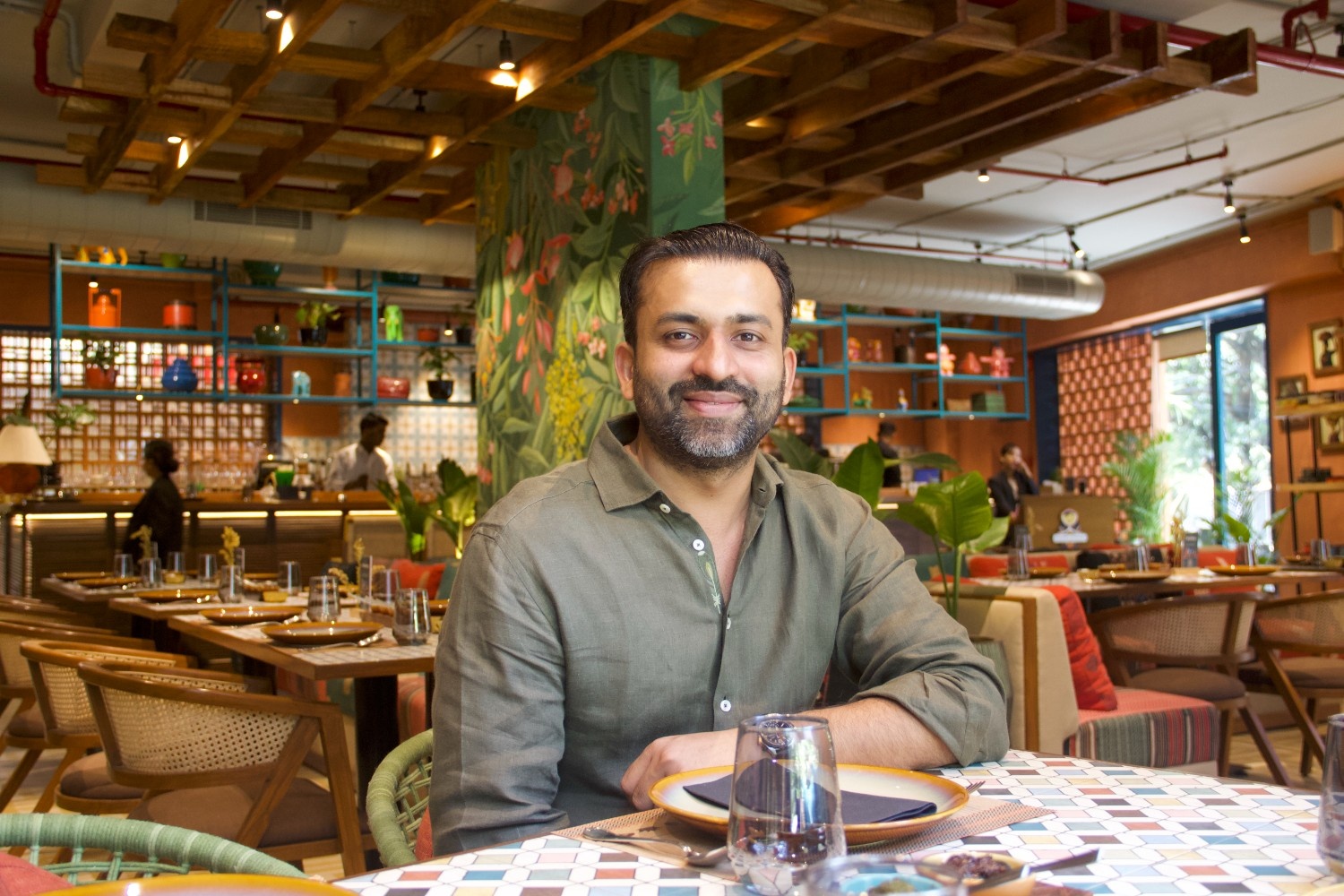
Purely a profound passion project established to honor and continue a mother’s Burmese lineage and heritage, a vegetarian-only, alcohol-free Burmese restaurant in India must have seemed less like a business plan and more like a romantic gamble. But in just 12 years, childhood friends Chirag Chhajer and Ankit Gupta have turned Hunger Pangs Pvt. Ltd., the parent company, into a hospitality business case-study. Today, Burma Burma spans 22 restaurants across seven major Indian cities, boasting a stellar market valuation of ₹500 crores.
At the heart of this success is a commitment to authentic storytelling led by Chef Ansab Khan. Their latest culinary activation introduces India to the bustling, nostalgic world of Myanmar’s tea shops through a dedicated menu spotlighting PaukSe (steamed buns) and Palata (layered flatbreads), simultaneously available across all outlets this entire month. Sudipto Mullick sat down with co-founder Ankit Gupta to know more.
What was the inspiration for launching this menu?
The first time I visited Burma, where my mother lived for 21 years, I instantly noticed the tea shops dotting the streets, which historically mushroomed from the 1900s. Entering them, we were pleasantly surprised by the vast array of dishes served from morning to night, from salads to noodles. In Burma, a tea shop is a socio-cultural pot where people hang out—just like in India, over endless cups of tea throughout the day. It’s always in my mind. With tea gaining massive prominence nowadays—people indulging in white and yellow teas, besides the usual—we decided to introduce the iconic Burmese tea shop experience here.
How does the culinary culture of Yangon or Mandalay inform this menu?
Mandalay, the cultural heart, and Yangon, the financial hub, are Myanmar’s two most iconic cities. Both feature idiosyncratic, full-fledged, evolving menus transitioning seamlessly from breakfast to lunch and dinner, alongside unique regional beverages. Our menu comprising Tofu and Scallion Twist, Spicy Curry Buns, Pauske Burger, OG Burmese Taco, Sunday curry Palata are similarly comforting, layered, and deeply savoury. They can be paired with pulled tea items – Pistachio and Saffron, Cinnamon Spice, Sea Salt Honeycomb and Jasmine Rice and Brown Sugar.
Two sweet dished are Tea Shop Cream Puff and Nutty Banana Sundae. The ideal time to experience them will be during the late morning or afternoon—a leisurely high tea or casual midday meal, slowly moving through a variety of small plates paired with our traditional pulled teas, with the food acting as the anchor for long conversations.
Burmese tea shops being more of an experience, are you also replicating the environment along with the food?
Absolutely. At Burma Burma, we recreate the complete cultural experience in all of our outlets. Besides the culinary curation, we offer distinct decor, thoughtful service, and the overall unhurried rhythm.
Primarily a tea-forward menu, are you also making it inclusive for coffee drinkers?
While contemporary coffee shops are emerging in Myanmar, tea remains the most intrinsic part of the country’s daily fabric and heritage, and we choose to stay true to this ethos. To ensure inclusivity, we offer an extensive selection of hot artisanal brews and our in-house special BB House Cola. Besides, the buns and the flatbreads are beverage agnostic.
Indians have a unique way of impacting foods that enter their ambit. Are you able to maintain the authenticity, or have you tropicalised the menu?
We strictly present authentic dishes without any fusion or Indianisation. Interestingly, because of historical migration patterns between India, China, Thailand, Sri Lanka, and Bangladesh, many traditional Burmese ingredients—like chickpea flour, turmeric, and certain chilies—already share a deep sensory overlap with Indian cuisine, making the authentic flavor profiles naturally familiar and well-received.
Talking about ingredients, have you experimented with your supply management, specially for this limited menu based on a one-time buy following an estimate?
Years before opening, we invested immensely in both culinary research and building a robust, dedicated supply chain. Because several key ingredients are entirely unique to Myanmar and unavailable in India, we established multiple warehouses, including a primary sourcing hub in Myanmar. We stock core items like authentic tea leaves, laphet (fermented tea paste), and specific spices centrally. Even for regional staples used across India—such as chili powder, chickpea flour, and turmeric—we source them from a single, unified origin to maintain absolute consistency across all our outlets, rather than relying on fragmented local distributors.
How do these limited-edition activations translate into business growth?
At Burma Burma, our average per-head spend ranges between ₹1,000 and ₹1,200. Selective activations like the PaukSe & Palata menu (₹450 each item in both menus) including beverages (₹320–380) & desserts (₹400 each), serve as a powerful gateway, prompting our regular diners to return for something entirely new while attracting curious first-time guests eager to explore rare culinary regions and flavor profiles.
Your growth has been phenomenal, currently being valued at a ₹500-crore market estimation. What’s the next growth phase?
Our immediate focus is to deepen our footprint in our existing cities while exploring tier-2 markets that show strong premium dining appetites. The goal is to scale responsibly without ever diluting the authenticity.