


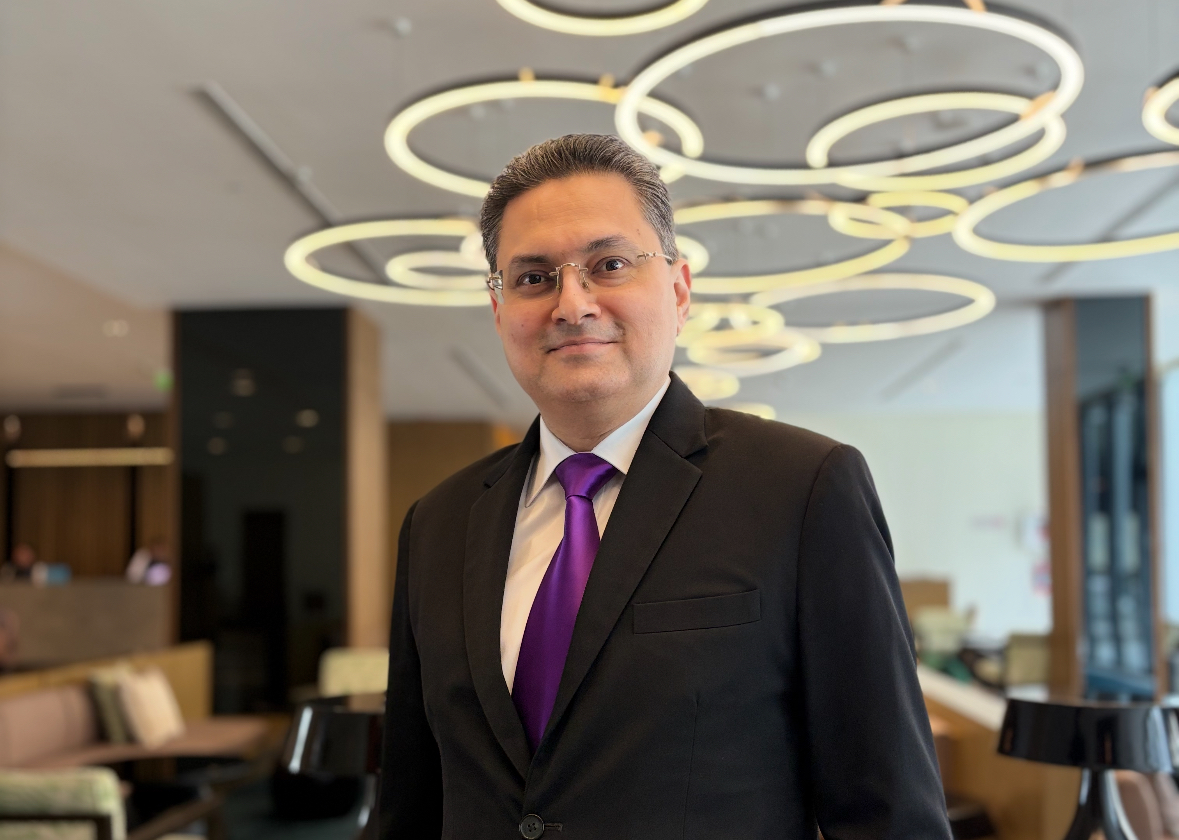
Standing tall in North Bengaluru, the Hilton and Hilton Garden Inn Embassy Manyata Business Park is more than just a hotel; it’s a major player in hospitality, recognised as the largest dual-branded property in India. Managing the hundreds of employees and thousands of rooms catering to a wide mix of corporate, MICE (Meetings, Incentives, Conferences, and Exhibitions), and leisure guests is a huge task Sujeet Kumar, Cluster General Manager of Hilton and Hilton Garden Inn Bengaluru Embassy Manyata Business Park leads this complex operation. He has developed his skills in various international locations. His leadership style is a mix of experience and adaptability. He focuses on agility, empathy, and strategic thinking. This approach ensures that the hotel provides consistent world-class guest experiences while maximising business results. For Kumar, success relies on empowering a large, diverse team. He believes that in modern hospitality, the human touch is just as important as the scale of the operation.
Kumar’s leadership philosophy is “a balance between global best practices and local relevance.” He states, “My diverse experience across international markets has helped shape a leadership style that balances global best practices with local relevance. I believe in empowering teams, fostering collaboration, and creating a culture of ownership.”
This philosophy is evident every day at the Manyata property, which employs hundreds and attracts a mix of corporate, MICE, and leisure guests. Managing such a large and complicated environment requires agility. Kumar refers to this as his “non-negotiable leadership muscle.” He explains, “In a large dual-branded property like Hilton’s largest in India, I lean into agility, empathy, and strategic foresight. Because I’ve worked in different markets, I’m more used to adjusting quickly while ensuring consistent guest experiences and strong business results.”
With a young team that includes many Gen Z professionals, Kumar thinks that leadership today is less about hierarchy and more about listening. He emphasises, “Understanding what drives younger talent is critical. I prioritise creating an environment where they feel heard, challenged, and supported while still maintaining discipline and accountability.”
People, Performance, and Positioning
For Hilton Manyata, Kumar narrows his goals down to three main areas: people, performance, and positioning. He points out that Hilton has consistently earned recognition as a Great Place to Work globally and in India, with the Manyata property serving as a “training ground for future hospitality leaders.” He says, “With thousands of rooms and extensive operations, the scale allows talented individuals to prove themselves and then advance into higher-leadership roles throughout the region.”
In terms of performance, the focus is on increasing market share and improving RevPAR through data-driven pricing and sales strategies. Equally important is reinforcing the hotel’s dual-brand distinction. “Hilton and Hilton Garden Inn Manyata serve business travellers, corporate groups, social events, and large conferences,” Kumar explains. “With 60,000 sq. ft. of event space and 22 breakout rooms, we have the largest convention and meeting facility in North Bengaluru.”
In a market as competitive as Bengaluru, where new hotels open every quarter, standing out is a challenge. For Kumar, that distinction comes from value, not price. “Our strategy focuses on value differentiation rather than just price competition,” he says. “Our value drivers are premium stays, integrated MICE capabilities, and exceptional food and beverage experiences.” The results are evident: the property has seen steady growth in both RevPAR and occupancy, largely driven by MICE and transient business. “The post-pandemic recovery is strong,” Kumar says, “and we’re well positioned for the next phase of growth.”
Best Practices from a Global Playbook
Having managed properties in various locations, Kumar brings a global perspective to Bengaluru, but one firmly based in operational discipline. He states, “From my time in different markets, I’ve observed several best practices that I’m incorporating into our operations here at Manyata.”
That begins with making decisions based on data, mapping the guest journey, and maintaining operational discipline supported by technology. He also stresses the importance of a culture of continuous feedback and recognition, which he sees as vital for sustained performance. “These practices are especially important in Bengaluru, where guest expectations vary and the workforce is young,” he explains. “A large part of our team is Gen Z, so it’s critical to combine structure with empowerment—giving them the clarity, tools, and ownership needed to thrive.”
In practice, this means enhancing analytics, understanding each guest’s travel person, whether for business, MICE, or leisure and personalising experiences accordingly. “Every guest wants something different, and our goal is to deliver exactly that without being intrusive,” he says. By aligning service delivery with metrics like Service Excellence & Personalisation (SEP), the hotel ensures both consistency and creativity. “This allows us to elevate guest experience while continuously nurturing the next generation of hospitality talent,” he adds.
Sustainability and Technology
If people and culture are one aspect of Hilton’s philosophy, sustainability and technology are the other. At the Manyata property, Kumar is translating Hilton’s global “Travel with Purpose” vision into local actions, aiming to halve the environmental footprint and double social impact by 2030.
“The property operates on 98% renewable energy,” he notes. “We have a bottled-water recycling plant to promote circular resource use, and we partner with community organisations like Say Trees for reforestation and agro-forestry projects.” Hilton also uses its LightStay platform to track energy, water, and waste for each meeting. Additionally, it provides Carbon Neutral Meetings, offering event planners tools for making sustainable choices. “Clients receive a certificate for offsetting carbon emissions and a ‘Meet with Purpose’ checklist to promote sustainable sourcing and waste reduction,” he explains.
Technology plays a crucial role in the guest experience. The hotel was among the first in Bengaluru to introduce digital keys and continues to expand contactless, app-based engagement through the Hilton Honours platform. “We want technology to enable warmth—not cold automation,” Kumar says. “These ESG and digital initiatives are integrated end-to-end so guests can make eco-friendly choices easily and confidently.” He adds with conviction, “We’re walking the talk—not just repeating buzzwords.”
Redefining the Guest Experience
Post-pandemic travel has transformed how guests interact with hotels. Flexibility, wellness, and personal connection have become essential. Kumar states that Hilton is evolving to meet these demands. “Guests value flexibility, wellness, choice, and genuine connection more than ever,” he says. “We understand that every guest has a different trip persona—whether a business traveller, MICE attendee, or leisure guest—and we focus on providing exactly what they want.”
This approach leads to wellness-centred stays, nutritious dining options, restful environments, and mindfulness-driven experiences. Hybrid meeting solutions combine in-person and virtual formats to suit new-age professionals. “Our approach is simple,” Kumar explains. “Anticipate needs, personalise experiences, and maintain the warmth and hospitality that the Hilton brand is known for—even in a tech-driven world.”
Bengaluru: The City of Possibility
Returning to Bengaluru, Kumar finds a city that reflects Hilton’s global values. The city is dynamic, ambitious, and always changing. “Bengaluru continues to be a hub of innovation—and that spirit is reflected in its hospitality landscape,” he says.
He is particularly excited about the city’s food and beverage creativity. “The bustling F&B scene in Bengaluru—from craft bars to unique dining experiences—offers a playground for creative culinary work and guest enjoyment,” he adds.
Kumar highlights that Hilton’s growth story in India relies heavily on Bengaluru. “We already have six Hilton properties here and five more opening soon,” he points out. “This underscores the scale of opportunities and our confidence in this market.” He concludes, “Being part of this growth journey—contributing to Hilton’s leadership in India—is energising.”
Asmita.mukherjee@saffronsynergies.in


