


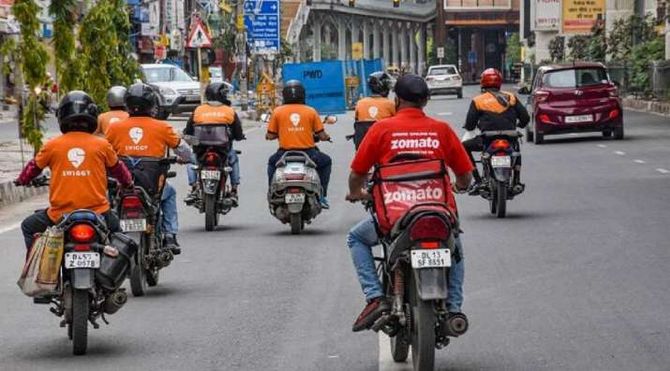
The debate around food delivery platform economics is gathering momentum beyond Bengaluru, with several Kolkata-based restaurateurs raising concerns over rising commissions, advertising expenses and alleged unexplained deductions on online food delivery platforms.
Restaurant operators claim that escalating costs associated with platforms such as Swiggy and Zomato are putting pressure on already thin margins, prompting some businesses to strengthen direct ordering channels while others have reduced or withdrawn their presence from certain aggregators altogether.
Margin Pressure
According to industry stakeholders, commissions that were once viewed as the cost of accessing a large customer base have steadily increased over the years, particularly following the pandemic-driven surge in online food ordering.
Chef Sushanta Sengupta, Founding Director of 6 Ballygunge Place, said commission rates have risen significantly since the restaurant first partnered with delivery platforms.
“Initially the commission was around 12 to 15 per cent per order. Post Covid, it increased to 19 to 23 per cent for older establishments like us, while newer restaurants are reportedly paying 28 to 32 per cent. On top of that, there is 18 per cent GST on their services and several hidden charges. It makes the business unviable for many restaurants,” he said.
The concerns mirror similar sentiments expressed recently by restaurant operators in Bengaluru, where industry bodies have questioned the sustainability of current platform-led delivery economics.
Direct Delivery Push
Several operators are now exploring alternative strategies, including strengthening in-house delivery networks and investing in direct customer engagement channels.
Asif Ahmed, owner of Sanjha Chulha, claimed that cumulative deductions can substantially reduce restaurant earnings from online orders.
“Average deductions can reach 40 per cent and sometimes even 50 to 60 per cent. It is killing the industry. Customers are paying more for convenience while restaurants are bearing the cost,” he said.
Ahmed noted that Sanjha Chulha has continued operating its own delivery network since its inception and believes more restaurants may eventually move towards direct delivery models if platform costs continue to rise.
Similarly, The Yellow Turtle has reportedly discontinued operations on one major delivery platform over the past several months. Owner Apeksha Lahiri alleged that commissions, discounts, packaging expenses and platform charges together significantly erode restaurant profitability.
“The biggest problem is the lack of transparency. We keep following up over deductions, but do not receive proper explanations. Communication with platform representatives is also extremely difficult because they keep changing,” Lahiri said.
She further alleged that advertising campaigns are sometimes activated without explicit consent, resulting in deductions that are difficult to reconcile.
Building Customer Relationships
Established brands are also seeking to reduce dependence on third-party aggregators by creating stronger direct relationships with customers.
Azra Golam, Sales and Marketing Director of Aminia, said increasing commissions have placed additional pressure on restaurant margins.
“We are working on strengthening our relationship with customers and developing additional business channels instead of relying only on online portals,” she said.
The trend reflects a broader shift within the foodservice industry, where operators are increasingly investing in loyalty programmes, direct ordering apps and proprietary delivery infrastructure to retain customer data and improve profitability.
A Different Perspective
Not all restaurant operators, however, believe current commission structures are excessive.
Debjani Mukherjee, Founder of Nanighar, argued that delivery platforms incur substantial costs related to logistics, technology and rider operations.
“Swiggy and Zomato take around 33 per cent. Considering the infrastructure they maintain, I think it is reasonable. The bigger concern is that visibility depends heavily on paid advertisements, and that system could be more liberal,” she said.
Her comments highlight a broader industry debate over the value proposition offered by aggregators. While restaurants benefit from customer acquisition, logistics support and digital visibility, many operators contend that rising commissions and marketing expenditures are increasingly offsetting those advantages.
Industry-Wide Debate
The issue has gained prominence nationally following concerns raised by restaurant associations regarding platform commissions, discounting practices, advertising costs and data ownership.
Industry observers note that food delivery platforms have become indispensable for many restaurants, particularly after the pandemic accelerated consumer adoption of online ordering. However, the growing dependence on aggregators has also intensified scrutiny of platform economics.
Consumers, meanwhile, have increasingly pointed to higher menu prices on delivery apps compared to dine-in or takeaway rates, raising questions about who ultimately bears the cost of the delivery ecosystem.
The National Restaurant Association of India (NRAI) is understood to be engaged in discussions on the issue, although no formal resolution has yet emerged.
For the hospitality and foodservice industry, the debate underscores a critical challenge: balancing the reach and convenience offered by delivery aggregators with the need to maintain sustainable restaurant profitability. As operators continue to reassess their digital strategies, the coming months could see more brands strengthening direct ordering channels and exploring alternative customer engagement models to reduce reliance on third-party platforms.