

Azure Hospitality is investing aggressively in the revival and expansion of its flagship Pan-Asian dining brand, Mamagoto, with plans to double the brand’s size over the next two-and-a-half years, backed by investments in store redesigns, menu innovation, technology-led customer engagement, and market expansion.
The company has already invested between INR 5 crore and INR 8 crore over the last 18 months towards the redevelopment of the Mamagoto brand, including outlet renovations, menu engineering, new brand touchpoints and the rollout of the Mamagoto 2.0 concept.
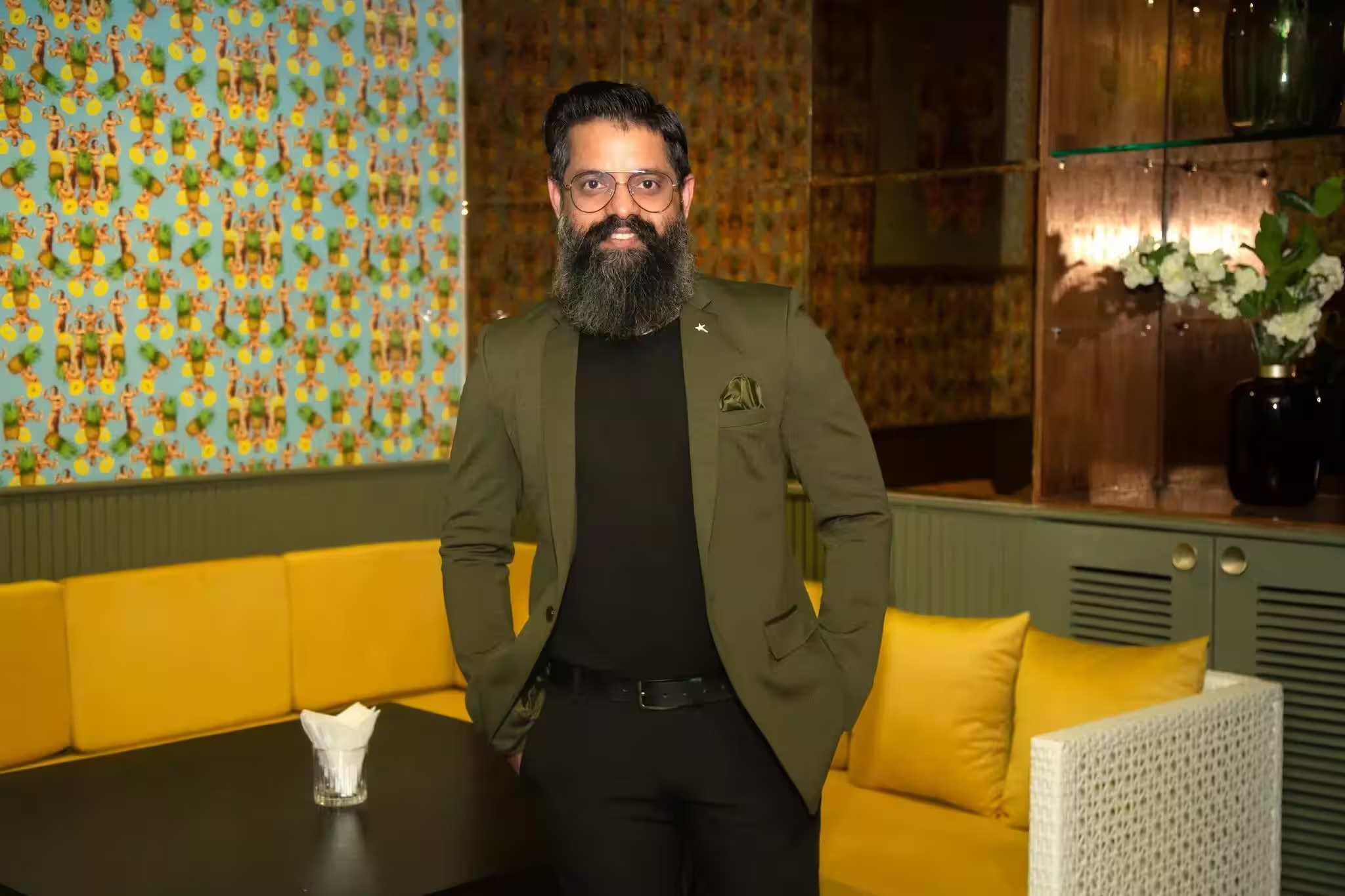
While speaking to Asmita Mukherjee, Vineet Kochar, Chief Operating Officer, Azure Hospitality Private Limited, said the transformation was driven by changing consumer expectations and growing awareness of Asian cuisines among Indian diners.
Brand Evolution
Kochar said Mamagoto, one of the early pioneers of Pan-Asian dining in India, recognised the need to evolve as consumers became more knowledgeable about regional Asian cuisines.
“Consumers today travel more, discover more and are far more aware of the culinary traditions of different Asian markets than they were a decade ago. Their expectations from a Pan-Asian restaurant have consequently evolved,” he said.
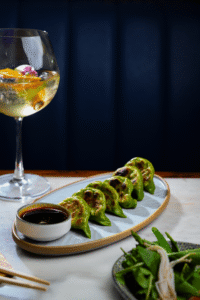 According to Kochar, the refreshed identity is designed to build on Mamagoto’s legacy while broadening its culinary repertoire to include stronger representations of Japanese and Korean cuisines. These categories have witnessed growing popularity among Indian consumers.
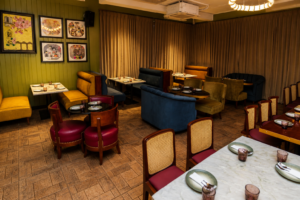 “This evolution is not about moving away from what Mamagoto has always stood for. It is about remaining relevant while staying true to the spirit of the brand. We have started implementing these changes across Delhi NCR and will progressively take them to other markets,” he informed.
The latest phase of the brand’s evolution was marked by the launch of Mamagoto 2.0 in Bengaluru’s Indiranagar, a market that the company considers strategically important.
Bengaluru Focus
Kochar described Bengaluru as one of India’s most experimental dining markets and said Indiranagar’s vibrant food culture made it a natural choice for the relaunch.
“With more than 40 dishes, Mamagoto 2.0 brings together our signature Pan-Asian offerings along with Sri Lankan, Japanese and Korean influences. We wanted to create a platform where we could continuously experiment, understand consumer preferences and keep introducing new flavours,” he said.
Calling the Bengaluru outlet a “food lab” for the company, Kochar noted that guest feedback would continue to shape future menu development.
“The response has been very encouraging. Both dine-in and delivery have performed well since launch, reinforcing our confidence in the market and in the potential of the new concept,” he added.
Growth Strategy
Azure Hospitality currently operates across 15-20 cities through a portfolio that includes Mamagoto, Dhaba, Sly Granny and Foxtrot.
Rather than pursuing rapid geographic expansion, the company is focusing on strengthening its presence in key markets such as the National Capital Region (NCR), Bengaluru, Hyderabad and Maharashtra.
“Growth for us is not about adding locations for the sake of scale. It is about building greater depth in markets where our brands already have strong resonance,” Kochar said.
At the same time, the company continues to evaluate opportunities in emerging tier – I and tier – II markets.
“India’s dining ecosystem is evolving rapidly. There is tremendous potential beyond the metros, and our approach is to expand thoughtfully so that every new location adds meaningfully to the larger Azure Hospitality ecosystem,” he said.
 Indore and Ahmedabad are among the cities currently on the company’s near-term expansion roadmap, he informed.
Customised Scale
With competition intensifying in India’s organised restaurant sector, Azure Hospitality is relying on a strategy that balances standardisation with localisation.
Kochar said each Mamagoto outlet retains the brand’s core identity while incorporating market-specific menu and design elements.
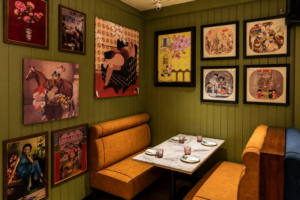
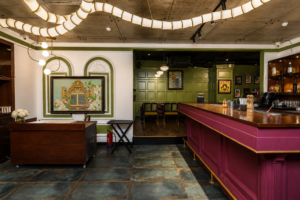
“We consciously avoid a cookie-cutter approach. Every Mamagoto has around five to ten dishes that are unique to that location, while the broader menu is adapted to local preferences. The interiors are also customised to reflect the character of the market,” he explained.
He emphasised that scale in the restaurant business increasingly depends on the ability to personalise experiences.
“There has to be familiarity when a guest walks into Mamagoto, but there also has to be something new to discover. Innovation cannot be a one-time exercise. It has to be an ongoing process across menu development, design, service and guest experience,” he said.
Menu Innovation
Menu innovation remains central to the company’s customer retention strategy. Kochar said Mamagoto’s menu philosophy is built around maintaining a balance between familiar favourites and new discoveries. “We retain the classics that guests have loved for years because they form the foundation of the brand. At the same time, we continuously introduce new flavours and influences to encourage exploration,” he said.
The company follows a consumer-led approach to menu development, using food tastings, limited-period offerings and promotional menus to test new concepts before introducing them permanently.
“Innovation should always be built on a strong foundation. We will continue to protect the dishes that define Mamagoto while evolving the rest of the menu to keep the experience fresh and exciting,” he added.
Hyderabad Priority
Among the markets identified for deeper expansion, Hyderabad occupies a prominent position in Azure Hospitality’s long-term strategy. “Hyderabad is a very important market for us and one where we see significant potential for future growth. We are actively evaluating additional locations and expect the city to remain a key focus area as we deepen our presence across select markets,” Kochar said.
Technology Push
Beyond physical expansion, Azure Hospitality is investing in technology as a key pillar of Mamagoto’s future growth. Kochar revealed that the company plans to launch a technology-enabled loyalty programme before the end of the year, aimed at strengthening customer engagement and improving guest understanding through data.
 “We are building a completely technology-driven loyalty ecosystem that will help us create more personalised experiences and develop deeper relationships with our guests,” he said.
The company is also exploring the use of artificial intelligence and technology-enabled learning platforms for staff training and development. “As we scale, investing in people becomes equally important. Technology and AI can help create more structured and effective training systems while ensuring consistency across locations,” Kochar informed.
He stressed that returns from these investments should be viewed from a long-term brand-building perspective rather than purely through short-term financialmetrics.
“The objective is to create a stronger, more relevant and more scalable brand. Investments in technology, people and customer experience will help drive sustained growth over time,” he said.
Future Vision
Down the line, Azure Hospitality expects technology, customer data and new formats to play a critical role in scaling Mamagoto. “Our ambition is to double the size of the brand over the next two-and-a-half years. This growth will be driven by market expansion, investments in technology, new formats and a more data-driven understanding of consumer behaviour,” Kochar said.
At the same time, he stressed that technology would complement rather than replace the human element of hospitality.“Data, technology and AI will become increasingly important, but we remain a hospitality business at our core. Our decisions will continue to be rooted in listening to guests, understanding their needs and staying close to the customer. The future lies in combining technology with intuition and customer-centricity,” he concluded.
Asmita.mukherjee@saffronsynergies.in