


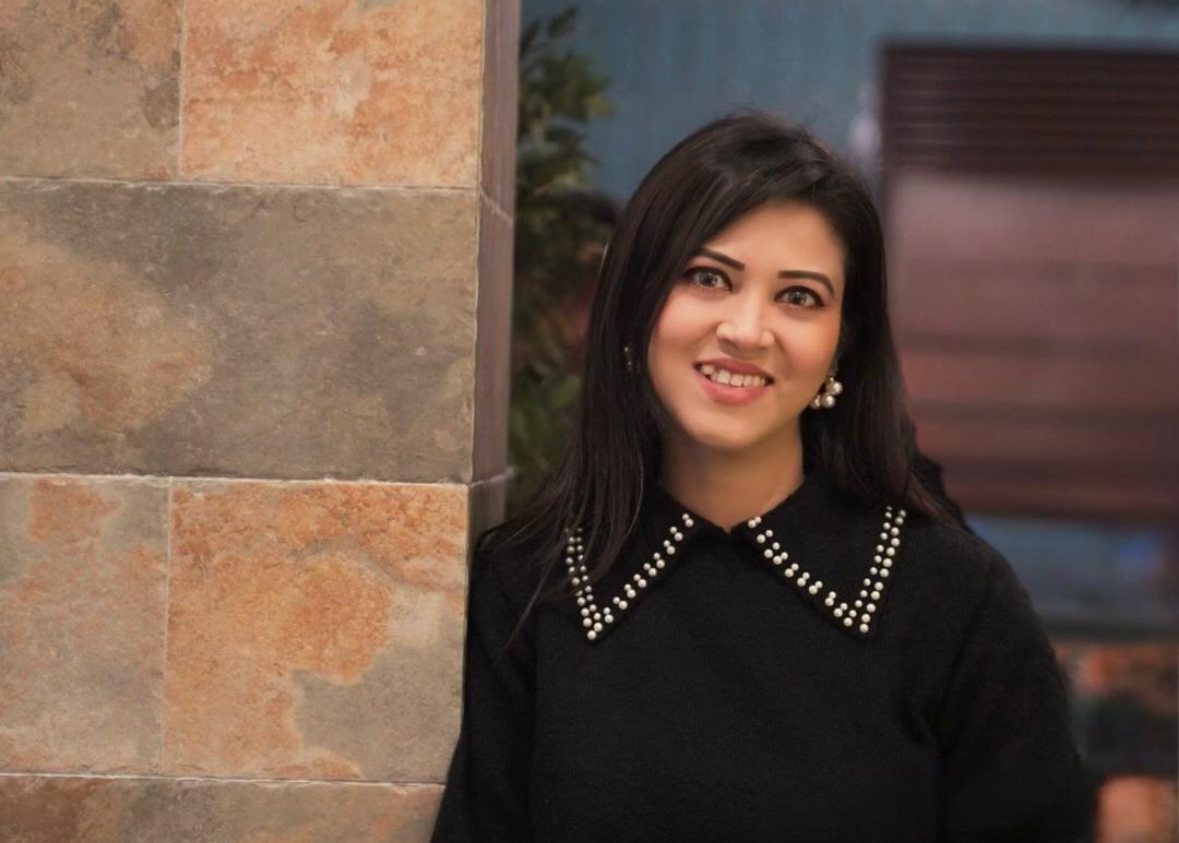
Kolkata’s Ballygunge has no dearth of restaurants, yet in just a year-and-a-half, Bonne Femme has managed to carve a unique position for itself, something founder Moushumi Sircar attributes not to glamour, but to relentless commitment, constant presence, and a knack to lead from the front.
Sircar, an electronics engineer who spent more than a decade in senior roles at TCS before turning entrepreneur, says the transition into the food business was a reality check. “It looks very glamorous… but trust me, it is just the opposite. You need to be hands-on. You need to be there everywhere basically.”
Having grown up in a family that ran a chain of garment shops, Sircar says business was there in her blood, but food was always her passion. “I have travelled globally and eaten extensively. Whenever a new joint opened up in the city, I would be among the first ones who visit the place in the first week.” That passion eventually found direction when she partnered with Sudip Mallick, the widely respected owner of Balaram Mullick & Radharaman Mullick sweets shop chain.
The core idea behind Bonne Femme emerged from Sircar’s belief that Kolkata was ready for global cuisine done differently. “We started with global cuisine… but the uniqueness lies in the fact that we added a touch of old-world Kolkata charm to all the global dishes.” She calls it ‘Bangaliana’—local flavours blended subtly into Oriental and Continental classics.
From Miso Mutton in Kolmi and Kagzi, to a Stroganoff infused with Gondhoraj, to creations like Koromcha Veloute Malai Bhetki (Bhetki malai tikka and French velouté made tangier with most underrated berries of Bengal, koromcha or carandas), and ‘Poddo Pata Kachin Chicken with Shitake and lotus stem’ (Shitake, lemon basil, asparagus, snow peas, bamboo shoots and much more inside lotus leaf).
Bonne Femme also houses a dedicated Calcutta Cabincelebrating old Kolkata favourites—fish fry, prawn cutlet, mutton cutlet—and a signature Fish Kachori with kucho chingri Aloo Dhum, a dish that even celebrity chef Ranveer Brar visited Bonne Femme recently to try and taste.
But behind the culinary innovations lies a far tougher story of what it takes to run a restaurant in the city.
Sircar says the food business demands an immersion that corporate professionals may not fully anticipate. “You need to see what your vendor is giving. You need to understand the meat and the fish. You have to be in the kitchen. There is nothing you would not have to do.”
The biggest challenge, she says, is people. Unlike the steady teams she managed at TCS, the restaurant workforce is dynamic, unpredictable and difficult to retain. Yet Bonne Femme cannot afford attrition. “My dishes are so different… you cannot just get a new person and tell them to start preparing. And the service people must know exactly how to explain the dish.”
Her response has been to bring in strong managerial discipline from her corporate past. “Everything was system-driven in TCS. So I brought the same thing here. Ops planning, rosters, menu archives, weekly sheets—everything is in Excel.”
She is candid about the personal cost: no weekends, no family holidays, no days off during festivals. “For one year I have not done a single vacation. I am here all the time. Even if my son is sick, I enter the place. There is no off.”
But the rewards, she says, do come. “Commitment really gives you returns… but it has to be inside you, as if it is in your blood.”
Encouraged by Bonne Femme’s success, Sircar is now planning expansion. “There will be a second Bonne Femme in Kolkata… probably Park Street.” She is also working on two new concepts—an Oriental outlet and a distinctive Indian concept—though locations are still being scouted.
For corporate executives attracted by the perceived glamour of the industry, Sircar offers a blunt message:
“It looks glamorous… but it is a lot more hard work than corporates. If you think it will be easy, no. The busiest days are when your family is off. You just have to put yourself in there every day.”
And above all, one has to have a big heart to feed people, that too quality food with some level of consistency. One cannot run a restaurant business with one eye on the balance sheet. Cutting corners to contain cost will be suicidal at least in the initial stages. What truly matters, she says, is intent. “You need to have a very open heart and a big heart to feed people. Just make people happy. Don’t cut down on quality.”