


For the International Institute of Culinary Arts (IICA), staying relevant in culinary education means staying closely connected with what is happening outside the classroom. From engaging with embassies and international chefs to drawing on its alumni network and introducing emerging subjects such as AI, the institute is continually looking beyond its own faculty and curriculum to keep pace with the industry.
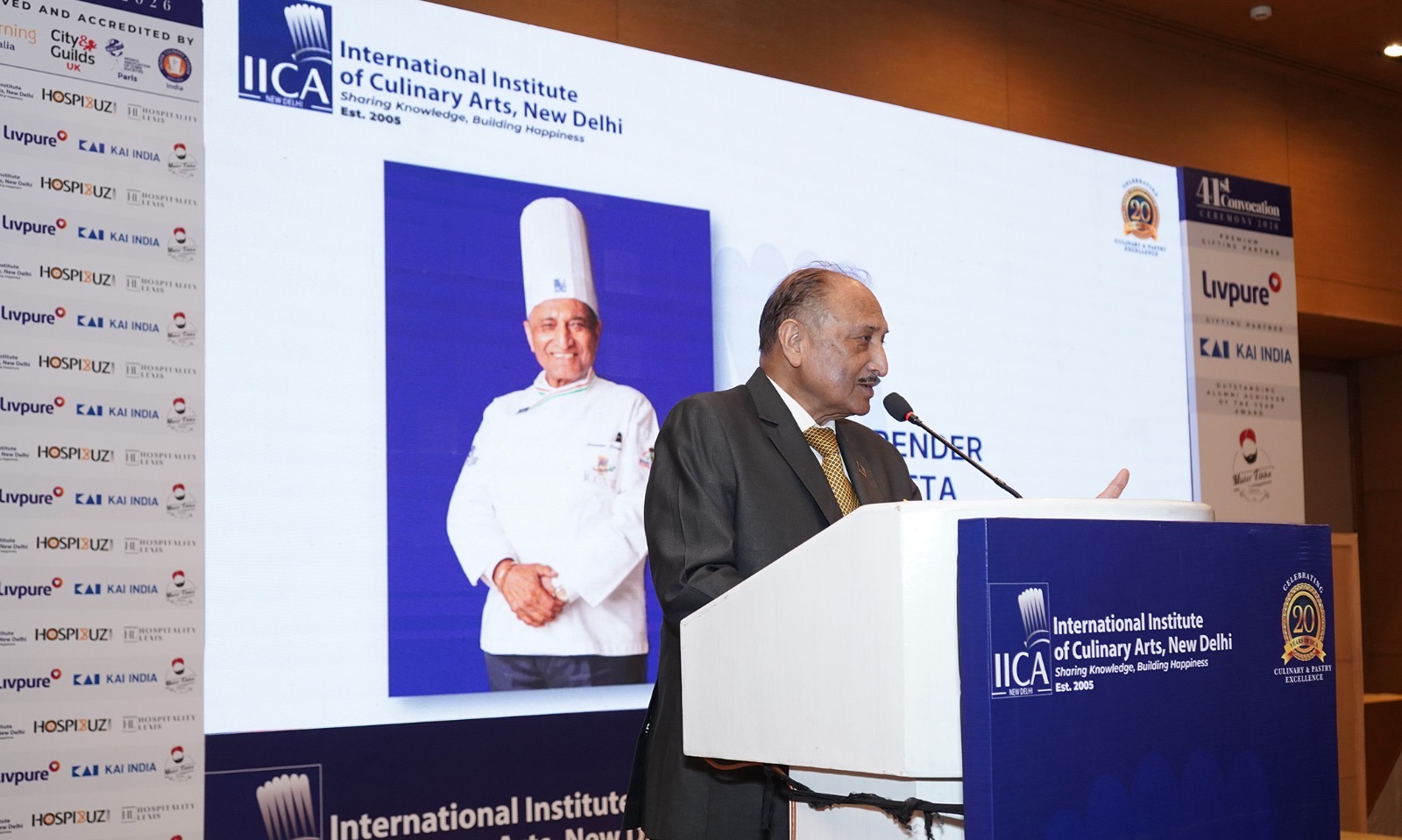
Speaking to HospitalityBiz India on the sidelines of IICA’s 41st convocation at Le Meridien New Delhi, IICA Chairman Virender S Datta said the institute’s close engagement with the industry and wider culinary world was one of the key factors that differentiated its approach from conventional culinary education.
“We are not book people. We are not classroom people. We are heavily active in the industry,” Datta said.
According to Datta, the approach is built around continuous learning and the willingness to evolve. “The moment the learning stops, stagnation will start,” he said, adding that IICA learns not only from industry experience but also through its interaction with students.
A major part of this effort has been the institute’s growing engagement with diplomatic missions and international culinary communities. Datta said the institute has developed close relationships with several embassies, with almost half of the ambassadors now familiar with IICA.
“We invite special chefs from them. Anyway, chef comes there, he comes here also,” he said, pointing to the exchange of knowledge and culinary practices that these interactions bring to the institute.
The initiative, he said, ensures that students are exposed to a wider diversity of culinary knowledge than what can come through the institute’s regular faculty alone. “We have a diversity of knowledge and information coming to us through our own initiatives,” Datta said.
The institute is also looking at how contemporary developments can be brought into the curriculum. Datta said IICA has introduced AI into its teaching on its own initiative, rather than waiting for external directives. It has also incorporated subjects and content reflecting changing culinary trends and developments.
The institute’s engagement with the outside world extends to its alumni network. Former students working in India and overseas return to IICA and share their professional experiences and knowledge with current students. Datta also pointed to the institute’s own travel and exposure to international markets as another source of learning.
“We travel a lot. We see what’s happening. We bring that knowledge back,” he said.
This industry proximity, Datta believes, also has a direct impact on students’ confidence. IICA’s engagement with industry has resulted in students and faculty being involved in competitions, training assignments and other professional activities, giving students a clearer sense of the opportunities available to them beyond conventional hotel careers.
“When the students see that they’re so close to industry and they are supporting industry, they get more confidence,” Datta said.
The institute marked its 41st convocation this month, celebrating graduates from its culinary and bakery programmes. IICA, which has completed 21 years in professional culinary and patisserie education, has trained more than 4,000 students, according to the institute.
The convocation brought together students, hospitality professionals, chefs and educators, with the programme including diploma distribution, awards for culinary and professional achievements, addresses by industry leaders and discussions on the professional realities facing the next generation of chefs.