


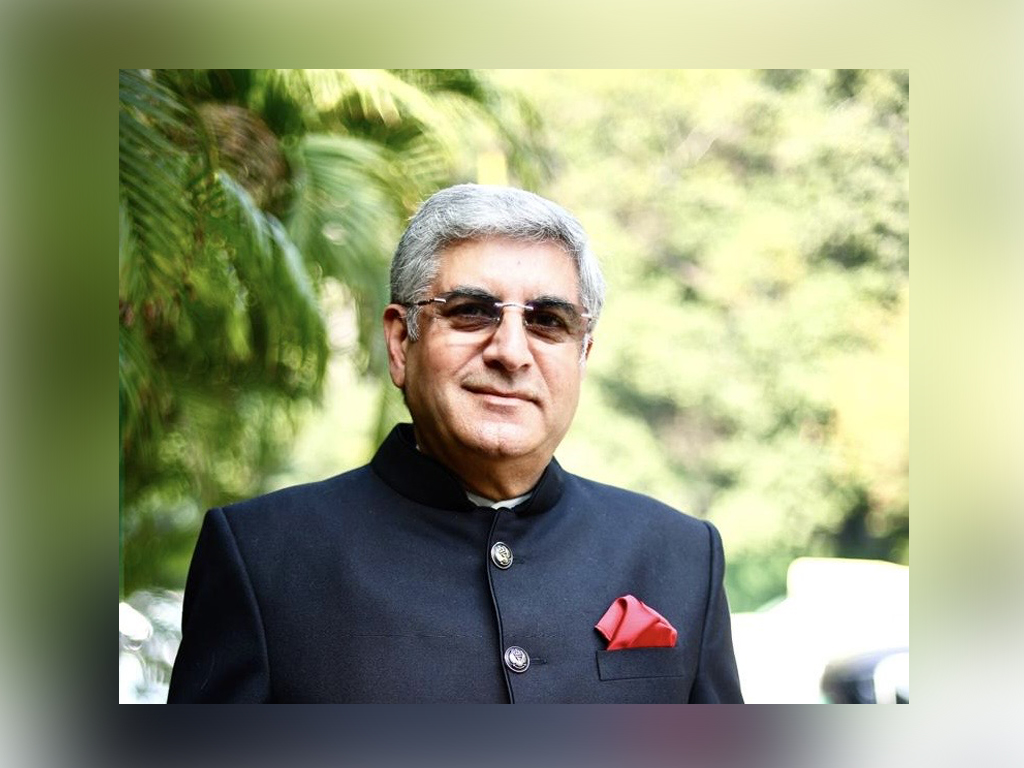
Veteran hotelier and VW Hospitality Consultancy founder and CEO Vijay Wanchoo has called for a rethink of the hospitality industry’s work culture to align with the aspirations of the younger generation, while urging hotels to adopt a more rigorous and proactive approach to food safety and hygiene.
Wanchoo was speaking to HospitalityBiz India ahead of the formal launch of his book ‘A Journey of Hospitality: Checked in by Fate’, to be hosted by The Park Hotel in New Delhi later this week. The book, nearly a decade in the making, and soft-released a few months ago, chronicles his journey through more than four decades in hospitality and the lessons, successes and mistakes that shaped his career.
His own journey began with The Oberoi in late 70’s, where one of his earliest milestones came after completing two years of kitchen training. He was appointed an instructor at the Oberoi School, teaching students who were around his own age. The experience, he recalled, forced him to deepen his own knowledge about the industry.
It was also during his Oberoi years that the late PRS Oberoi recognised his potential. At the age of 23, Wanchoo was sent to Westminster College, London, for specialised training in hotel food and beverage. On his return, he was deputed to the group’s Kashmir property to address operational and guest-feedback issues. PRS Oberoi also told him that he could eventually become an F&B manager—an observation that helped shape the young Wanchoo’s career direction.
Wanchoo said his generation largely learned the business “the hard way”, at a time when structured mentoring was limited. His book, therefore, is aimed not only at hospitality professionals but also at students and young people considering a career in the industry.
He credits four mentors—Nakul Anand, Rakesh Mathur, V.S. Datta and Davinder Kumar—as his “gurus” whose influence shaped him as a hotelier.
That generational experience also forms his views on today’s workforce. Wanchoo believes younger professionals are increasingly seeking faster career progression, greater flexibility and work-life balance. While he acknowledged that hospitality’s operational demands make a conventional nine-to-six, five-day week difficult, he argued that hotels should explore ways to provide more time off and reduce excessive working hours.
“The younger generation today will be happy to do a 9 o’clock to 6 o’clock job and get a weekend off,” he said, adding that some hotels have already begun offering additional days off. His own preference would be a nine-hour workday with two weekly offs, though he acknowledged that this remains “a far cry” for much of the industry.
When invited his attention to reports about gross food safety and hygiene negligence during FDA inspections in premium hotels and restaurants in the country, Wanchoo sounded a strong warning particularly to branded hotels where lapses can have serious reputational consequences. According to Wanchoo, the executive chef and general manager must take primary responsibility, while the head of stores must ensure basic inventory discipline, including the FIFO (first-in, first-out) principle.
Wanchoo pointed out that leading hotels already have kitchen laboratories and systems for random sampling and testing of food materials. The existence of such systems, he said, makes reports of expired products in major hotels particularly concerning.
In the age of aggressive social media and other media scrutiny, he said, any such lapses can have a reputational crisis almost instantly. Hotels, therefore, need regular, pre-emptive and proactive checklists rather than waiting for regulatory inspections. “The hotel has to keep its end very, very clear,” he said.