


Grandeur, legacy and impeccable service continue to shape a timeless definition of luxury.
In an era when luxury hospitality is constantly evolving, some hotels remain remarkably untouched by the pressure to follow trends. Their appeal lies not merely in historic architecture, but in the sense of continuity they offer—where heritage lives through grand interiors, enduring rituals, generations of returning guests and a deeply rooted culture of service.
From the Alpine glamour of St. Moritz and the sophistication of Zurich to the French Riviera, Paris, Hong Kong and the Tuscan countryside, these iconic properties demonstrate that the most enduring form of luxury is often the one that does not need to reinvent itself. Instead, it evolves carefully while preserving the character, traditions and sense of place that made it exceptional in the first place.
Badrutt’s Palace Hotel, St. Moritz
St. Moritz, Switzerland
Since opening in 1896, Badrutt’s Palace has become synonymous with St. Moritz and the art of Alpine hospitality. Over the decades, the hotel has welcomed royalty, cultural icons and international personalities, building a legacy that is closely intertwined with the glamour of the Swiss Alps.
Yet its appeal extends beyond its celebrated history. Today, the Palace balances its grand heritage with contemporary design, gastronomy and wellness. Its legendary Le Grand Hall, extensive culinary offering and panoramic mountain setting preserve the rituals of grand hotel living, while newer spaces such as the Serlas Wing introduce a contemporary interpretation of luxury.
The result is a property where heritage and modernity coexist without compromising the distinctive character that has defined Badrutt’s Palace for generations.
Baur au Lac, Zurich
Zurich, Switzerland
Set beside Lake Zurich, Baur au Lac has been part of the city’s luxury landscape since 1844. What began as a grand villa on the edge of Zurich has evolved into one of Europe’s most enduring family-run luxury hotels, remaining under the stewardship of the Baur-Kracht family.
Its interpretation of luxury is distinctly Swiss—refined rather than ostentatious, traditional without feeling overly formal. Historic details sit comfortably alongside contemporary design, while its gardens, lakefront setting and longstanding service culture create an atmosphere of permanence.
More than a grand hotel, Baur au Lac has the character of an exceptionally elegant private residence, offering a sense of intimacy and discretion that has remained central to its identity for more than 180 years.
The Peninsula Hong Kong
Hong Kong SAR
Since opening in 1928, The Peninsula Hong Kong has held a singular place in the city’s hospitality landscape. Often referred to as the “Grande Dame of the Far East”, the hotel represents a distinctive meeting of Eastern and Western traditions.
Its classical architecture, grand lobby, celebrated afternoon tea and famously meticulous service remain integral to the Peninsula experience. At the same time, the property has consistently embraced innovation, from its iconic Rolls-Royce fleet to its modern tower, contemporary dining concepts and wellness facilities.
This ability to combine tradition with progress has enabled The Peninsula Hong Kong to remain relevant across generations without losing the character that made it an icon.
L’Apogée Courchevel
Courchevel, France
L’Apogée Courchevel offers a contemporary interpretation of old-world Alpine luxury. Established in 2013 at the top of Le Jardin Alpin in Courchevel 1850, the hotel draws on the traditions of the French Alps while expressing them through a distinctly modern lens.
Warm timber, rich textiles and intimate chalet-inspired spaces create the atmosphere of an elegant Alpine residence. Its suites, penthouse and chalets extend that experience through expansive mountain views, private spas and rooftop hot tubs.
L’Apogée demonstrates that old-world luxury is not necessarily defined by age. It can also be expressed through craftsmanship, warmth, privacy and a strong connection with the destination.
Hôtel du Cap-Eden-Roc
Antibes, France
Perched on the Cap d’Antibes, Hôtel du Cap-Eden-Roc has been part of the French Riviera’s cultural and social landscape since 1870. Originally conceived as a retreat for writers and creative personalities, it gradually evolved into one of the world’s most celebrated seaside hotels.
Its history is closely associated with artists, writers and cultural figures, while its clifftop gardens, Mediterranean views and legendary seawater pool carved into the rock have become icons in their own right.
Today, the hotel retains its Riviera glamour while continuing to evolve through contemporary cuisine, private villas and the Dior Spa. Its enduring appeal lies in the ability to introduce modern experiences without diluting the romance and sense of place that define the property.
Le Bristol Paris
Paris, France
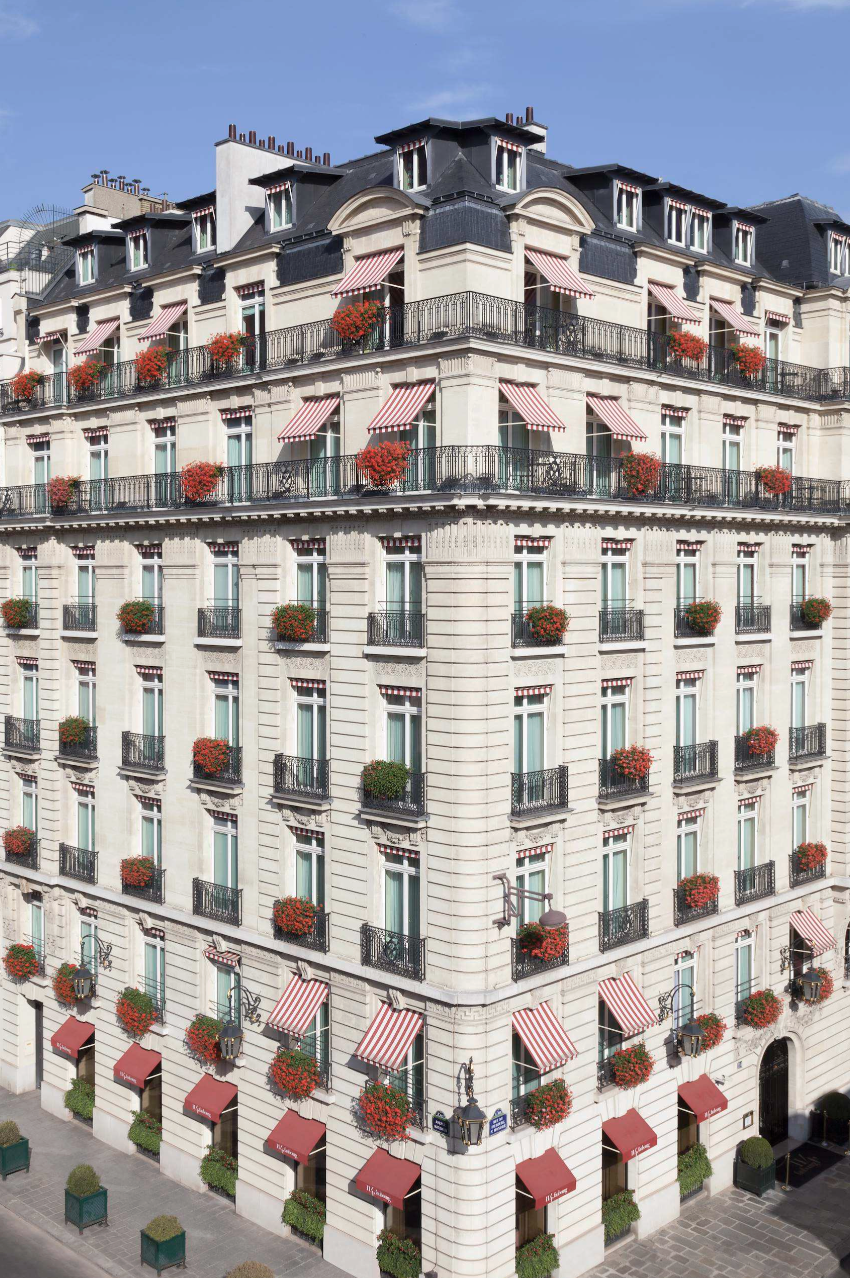
Few hotels embody the French art de vivre as naturally as Le Bristol Paris. Opened in 1925 on rue du Faubourg Saint-Honoré, the hotel emerged during the exuberance of the Roaring Twenties and quickly became a meeting point for figures from the worlds of art, fashion and culture.
Its history is woven into the cultural fabric of Paris, with personalities including Coco Chanel, Pablo Picasso, Salvador Dalí and Josephine Baker associated with the hotel over the decades. During the Second World War, Le Bristol also served as the home of the American Embassy while remaining one of the few luxury hotels of its stature to avoid requisition.
More than a century after opening, Le Bristol continues to express Parisian elegance through its interiors, gastronomy, gardens and highly personalised service. Its centenary in 2025 marked another milestone in a story built on hospitality that feels both exceptional and effortless.
Castelfalfi
Tuscany, Italy
In the Tuscan countryside, Castelfalfi offers a different interpretation of heritage. Rather than being centred around a single historic hotel, it encompasses an entire medieval village brought back to life.
Its history stretches from Etruscan origins through the medieval era and the period of the Medici. The historic landscape includes La Rocca castle, the Church of San Floriano and the Medicean Park, while olive oil, wine and agriculture remain central to the identity of the destination.
Today, restored historic architecture sits alongside contemporary hospitality, gastronomy, wellness and experiences rooted in the surrounding landscape. The appeal is less about visiting a resort and more about inhabiting a living piece of Tuscany.
The enduring appeal of heritage
What connects these properties is not simply their age, architecture or illustrious guest lists. It is their ability to create a sense of continuity.
In a hospitality world increasingly defined by speed, personalisation and constant reinvention, these hotels offer something increasingly valuable: the feeling that some experiences are meant to endure. A familiar afternoon tea, an imposing lobby, a family-run tradition, a century-old garden or a ritual of service passed from one generation to the next can become as meaningful as any contemporary luxury amenity.
The modern traveller may seek sophisticated design, wellness and personalised experiences, but the desire for authenticity remains timeless. Perhaps that is the greatest strength of these legendary properties: they do not simply recreate the past—they allow guests to experience a living version of it.