


The traditional hotel booking journey is undergoing a structural shift, with digital content now playing a decisive role in shaping demand well before travellers begin searching, according to a new industry report by Noesis Consulting.
The report highlights that hospitality demand in India is no longer driven primarily by destination or price comparison. Instead, it is increasingly influenced by visual exposure on social platforms, where travellers encounter hotels passively and build preferences over time.
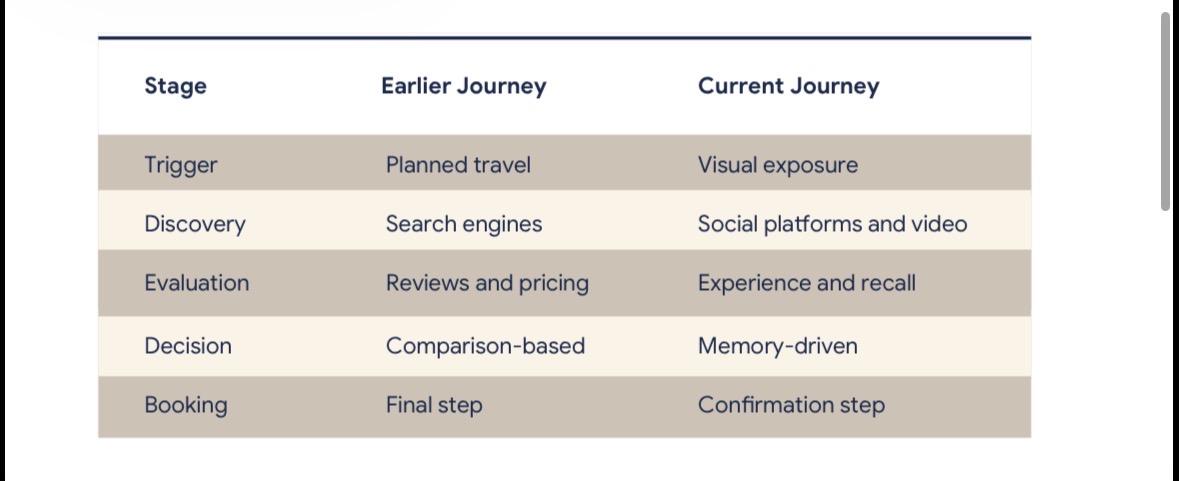
Earlier, the booking process followed a linear path—search, compare, evaluate, and book. This has now evolved into a “content-first” model, where discovery precedes intent. Travellers often decide on a property after repeated digital exposure, with booking becoming a final confirmation step rather than the starting point.
The shift is being driven by the rise of short-form video, higher screen time, and growing fatigue from excessive choices on booking platforms. Consumers now rely on memory and recall of visually appealing properties instead of browsing extensively at the time of booking.
This behavioural change is also reshaping demand patterns across segments. Booking windows are shrinking, particularly for leisure travel, while demand is becoming more experience-led. Features such as infinity pools, wellness offerings, scenic views, and design aesthetics are emerging as primary decision drivers, often outweighing location itself.
The report notes that properties with strong digital visibility are seeing higher occupancy and pricing power, even in non-prime locations. Demand spikes are increasingly linked to content virality, requiring hotels to adopt dynamic pricing and faster response strategies.
For operators, the implications are significant. Hotels must integrate design, operations, and marketing to create “capture points” that encourage content creation, while maintaining consistent on-ground delivery. Continuous digital engagement, rather than campaign-led marketing, is emerging as a key demand driver.
The report concludes that visibility has become a core determinant of demand, marking a fundamental shift in how hospitality businesses attract and convert customers in a digital-first environment.