


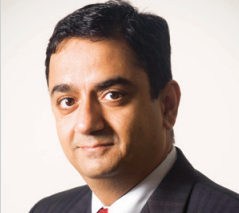
As the Hotel Investment Conference South Asia (HICSA) steps into its third decade, it does so at a time when South Asia’s hospitality sector is being reshaped by shifting capital flows, strong domestic demand, and a more discerning investment climate. Over the years, HICSA has evolved into a key industry platform, convening owners, investors, operators, and policymakers to drive conversations that influence real-world decisions and long-term strategy. For Manav Thadani, Chairman of Hotelivate, this phase marks a transition toward more disciplined, execution-led growth, where adaptability and market relevance are critical. As the sector navigates uncertainty alongside opportunity, HICSA continues to position itself as a forum that not only reflects industry trends but actively shapes the future direction of hospitality investment in the region. Asmita Mukherjee reports….
As the Hotel Investment Conference – South Asia (HICSA) enters its third decade, how do you see its role evolving in shaping hospitality investment conversations in South Asia?
In a world shaped by uncertainty, capital volatility, and shifting travel patterns, forums like HICSA matter because they create clarity. We also feel blessed that we are still able to host this event as many other events in the larger region has to be postponed. For that we are grateful. HICSA bring owners, operators, investors, brands, lawyers, architects, consultants and policymakers into one room and enable the kind of honest, high-quality dialogue that influences real decisions. As HICSA enters its third decade, its role is becoming even more strategic. Delegates can expect unparalleled networking opportunities and a curated agenda, focussing on real world problems.
What are the most significant investment trends currently shaping the hotel sector in South Asia that will likely be highlighted at this year’s conference?
A few clear trends are shaping the conversation. First, strong domestic demand continues to be the biggest growth engine, whether through leisure travel, weddings, MICE, or religious tourism. Second, investors are becoming more focused on adaptability, operational resilience, and quality of execution rather than simply chasing headline growth. Third, there is greater interest in India and South Asia from both global capital and local investors, but each is looking at the market through a different lens — global funds seek governance, scale, and predictability, while domestic capital often moves faster with stronger local conviction. These themes are central to where hospitality investment is headed and are likely to be front and centre at HICSA.
In an increasingly competitive hospitality landscape, what opportunities do you believe still remain untapped for investors and developers in the region?
One of the biggest untapped opportunities remains in Tier 2 and Tier 3 markets. These are not speculative opportunities anymore, but they do require a more thoughtful approach. They are not plug-and-play markets; success depends on building the right product, at the right price point, with a clear understanding of local demand. Beyond geography, there is also untapped value in designing assets around emerging domestic travel behaviours rather than relying only on traditional urban demand assumptions. India is an undersupplied market in terms of hotel rooms with a large majority being a part of the unorganised space. As brands continue to explore opportunities in nascent and emerging markets, the investors and developers who will stand out are the ones who identify relevance before scale.
How important is cross-border investment for the growth of the South Asian hospitality sector, and is HICSA seeing greater global investor interest?
Cross-border investment is extremely important because it brings not just capital, but also institutional discipline, global benchmarks and best practices, and long-term confidence to the sector. India, in particular, is increasingly attractive because of its strong domestic demand, infrastructure momentum, rising consumption, and expanding middle class. We are also witnessing Indian family offices invest abroad and Hotelivate thru its global offices is beginning to work with these family offices. Hotelivate is well positioned to facilitate these conversations through HICSA, and yes, there is clearly growing global investor interest, especially from large funds that are already active in the market.
Technology is rapidly transforming the hospitality landscape. Will the conference address emerging innovations such as AI-driven operations, digital guest experiences, or smart hotel infrastructure?
It absolutely will! We have curated sessions around AI and its larger role in hospitality, because technology is no longer a side conversation in this sector. AI is already beginning to reshape hotel feasibility, revenue strategy, and operational intelligence. The most important point, however, is that AI will not replace judgment; it will make judgment sharper and strategy more intelligent. The same applies to guest-facing technology and smart infrastructure. The real opportunity lies in using technology not as a gimmick, but as a way to improve decision-making, personalize experiences, and drive efficiency. That is exactly the kind of practical innovation conversation thatHICSA will facilitate. Listening to global thought leaders will also help get a perspective on how they are managing technology on a daily basis.
In your opinion, what are currently the biggest challenges facing hotel owners and developers in South Asia, and how can industry collaboration through platforms like HICSA help address them?
One of the biggest challenges today is navigating uncertainty while still making long-term investment decisions, the world IS on fire! Apart from that, the industry is facing a huge dearth in talent and human capital. Another major challenge is ensuring that growth is sustainable and not disconnected from market realities. Platforms like HICSA help because they create space for peer learning, open dialogue, and shared perspective. In a sector where timing, conviction, and execution all matter, collaboration can often reduce blind spots and improve decision-making.
What new formats or experiences can attendees expect this year that will enhance engagement and knowledge-sharing during the conference?
What is most exciting is the shift toward more focused, more actionable conversations. Formats such as the Owners’ Only Session, the HOSI General Managers’ Workshop have been curated as they go beyond presentation and move into practical insight-sharing. HICSA stands apart not just for the quality of content as well as the large percentage of owners at the conference. We have something else exiting this year as well – a mentalist session!
For first-time attendees, what aspects of the conference would you say make HICSA particularly valuable from a business and learning perspective?
For first-time attendees, HICSA offers two things that are hard to replicate elsewhere: access and relevance. It brings together the full ecosystem — owners, investors, operators, consultants, and market-makers — in one place. That creates opportunities not only for networking, but for hearing how strategic decisions are actually being made. From a learning standpoint, the value lies in the quality of dialogue.
How do you see the South Asian hospitality investment landscape evolving over the next five years, and what role will HICSA play in shaping that narrative?
Over the next five years, South Asia’s hospitality investment landscape is likely to become deeper, more disciplined, and more diversified. While the world is literally on fire, we are hopeful that our growth will continue to be supported by domestic demand. Use of technology, the manpower dilemma, emphasis on sustainability as an operational priority, and continued interest from both institutional capital and local investors, will all be evolving conversations and HICSA will play an important role in shaping that narrative.