


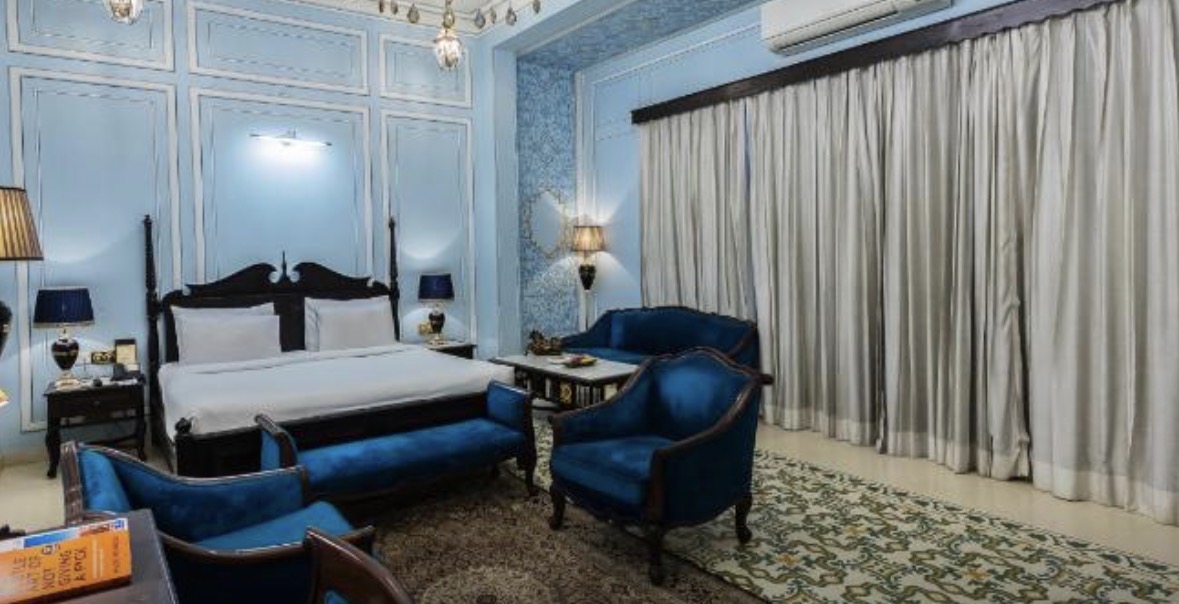
With a 130-year legacy rooted in Jaipur’s royal history, Grand Uniara Hotel has evolved from a private palace into a heritage hospitality address that blends conservation with contemporary relevance. As demand for experiential travel and destination weddings accelerates, the property has carved a distinct niche through its intimate scale, curated experiences and strong focus on authenticity.
In an exclusive interview with Asmita Mukherjee, Trisha Singh, Operational Manager, Grand Uniara Hotel, Jaipur, speaks about reinterpreting royal hospitality for today’s traveller, balancing heritage with modern expectations, and leveraging weddings, dining and experiential offerings to drive occupancy, rates and long-term value in one of India’s most competitive heritage markets.
Grand Uniara has a 130-year legacy. What was the vision behind transforming a historic palace into a heritage hotel?
The vision was never to convert the palace into a conventional hotel, but to extend its legacy of hospitality to a wider audience. For generations, Grand Uniara has been a space of gathering, celebration, and refined living. Transforming it into a heritage hotel was a conscious decision to preserve its architecture, stories, and cultural soul while keeping it relevant in a contemporary context.
Our approach has always been conservation through continuityensuring the palace remains lived in, evolving, and meaningful, rather than becoming a static monument.
How do you interpret the concept of “royal hospitality” in today’s evolving luxury and experiential travel landscape?
Royal hospitality today is no longer defined by formality or excess, but by personalisation, warmth, and authenticity. It is about making guests feel genuinely cared for, not merely impressed.
At Grand Uniara, royal hospitality translates into intuitive service, thoughtfully curated experiences, and an environment where guests feel like residents rather than visitors. As luxury travellers increasingly seek emotion and memory over opulence alone, heritage properties like ours naturally resonate in this evolving landscape.
What makes Grand Uniara a preferred choice for destination weddings compared to other heritage venues in Jaipur?
Grand Uniara’s strength lies in its intimate palace scale combined with versatile event spaces. Unlike sprawling forts or very large hotels, we offer a more personal and private environment, where the property can truly feel like it belongs to the wedding family.
Our central location, multiple venues including lawns, courtyards, darbar halls, and rooftop spaces along with strong in-house F&B capabilities and hands-on involvement in planning, make us especially appealing for bespoke, detail-oriented celebrations.
How do destination weddings and social events impact occupancy levels and seasonal demand at the property?
Destination weddings are a key driver of high-value occupancy, particularly during peak wedding months. They often result in full or near-full property buyouts, longer stays, and significantly higher overall spend across rooms, food & beverage, and ancillary services.
Importantly, weddings also help smooth seasonality by anchoring demand during shoulder periods and providing greater predictability and revenue visibility for the business.
From a performance standpoint, how have ADR and ARR evolved for heritage hotels like Grand Uniara in recent years?
Heritage hotels have witnessed consistent ADR growth, driven by rising demand for experiential and culturally rooted travel. Today’s guests are increasingly willing to pay a premium for authenticity, space, narrative, and emotional connection.
While ARR growth has been steady, the more meaningful shift has been toward better revenue quality driven by longer stays, higher F&B contribution, event-led business, and improved mix of experiential travellers. For heritage properties, value creation today goes beyond room nights to the overall experience ecosystem.
How does the hotel leverage its F&B offerings—Satva, Arogo, and Burj—to enhance guest experience and overall revenue?
Each of our dining outlets is designed to play a distinct yet complementary role in the guest journey. Satva celebrates refined vegetarian dining rooted in Indian culinary traditions, Arogo serves as an all-day, multi-cuisine comfort destination, while Burj offers a contemporary rooftop experience defined by views, ambience, and curated cocktails.
Together, these outlets create a complete culinary ecosystem within the property, encouraging guests and event clients to explore varied dining experiences without stepping outside. This not only enhances overall satisfaction but also increases dwell time, per-guest spend, and F&B-led revenue, making dining a strategic pillar of the hotel experience rather than a supporting function.
What role does curated dining play in strengthening the destination wedding and leisure proposition at Grand Uniara?
Curated dining is central to how guests remember a celebration or a stay. For destination weddings, food is not treated as a checklist but as an experience with menus thoughtfully crafted to reflect regional flavours, family traditions, and contemporary tastes.
For leisure travellers, dining becomes a gateway to Rajasthan’s culinary heritage, allowing them to engage with the destination beyond sightseeing. This emphasis on storytelling through food elevates weddings and leisure stays from momentary events into immersive, emotionally resonant memories, significantly strengthening our overall proposition.
How do you see occupancy trends, rate growth, and demand shaping up for heritage hospitality in Jaipur?
The outlook for heritage hospitality in Jaipur remains strong and optimistic. Demand continues to be driven by destination weddings, experiential leisure travel, and increasing international interest in culturally rich stays. We expect healthy occupancy levels with steady, sustainable rate growth, particularly for well-maintained, experience-led properties.
Today’s traveller is far more discerning, and heritage hotels that invest in authenticity, service excellence, and meaningful storytelling are best positioned to outperform. In this environment, value is no longer driven by scale alone, but by the quality and depth of the experience offered.