


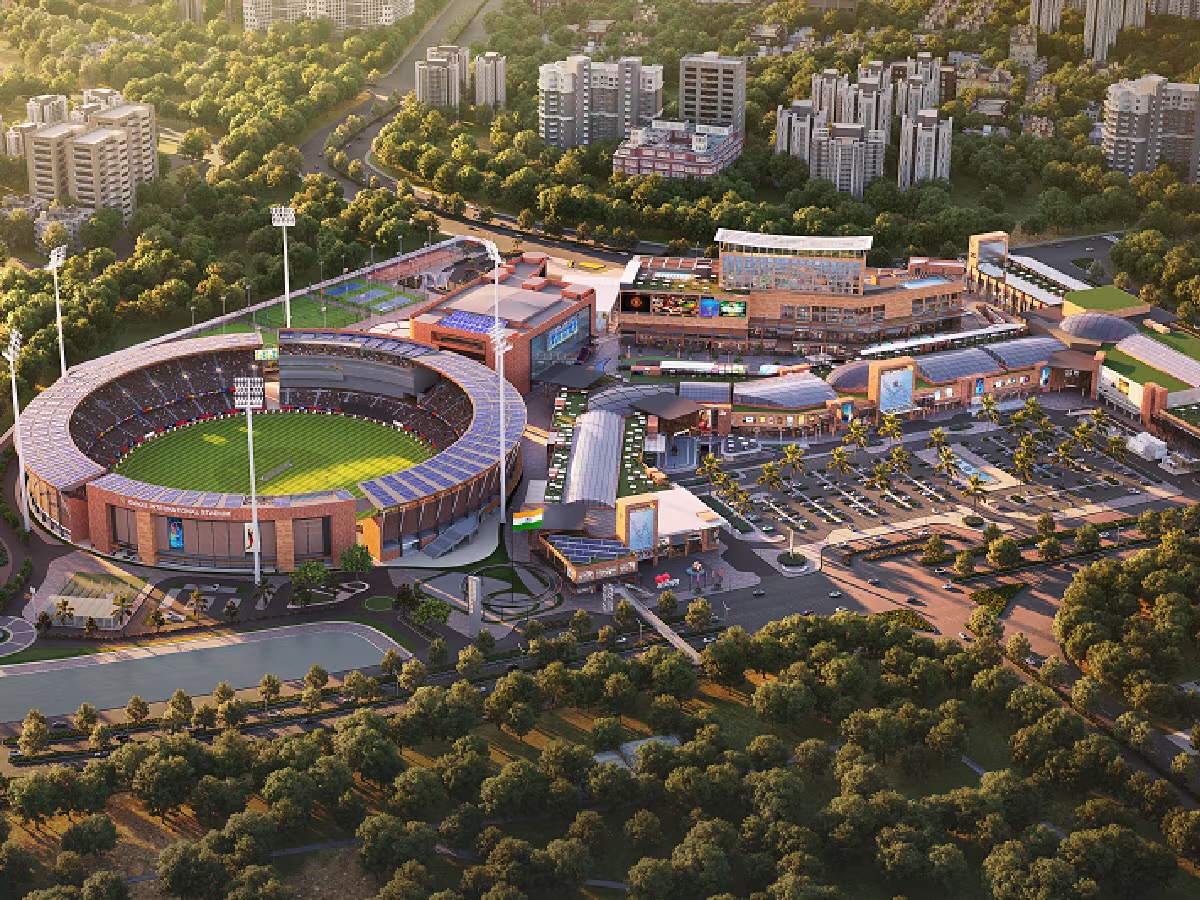
A new era of hospitality-driven urban development is beginning in Dwarka, Delhi. The Omaxe State, a significant 50-acre mixed-use project by Omaxe Ltd., works in partnership with the Delhi Development Authority (DDA) to focus on world-class hospitality at its core. The project’s standout feature is its groundbreaking collaboration with The Indian Hotels Company Limited (IHCL). Asmita Mukherjee spoke with Mohit Goel, Founder of BeTogether and Managing Director of Omaxe Ltd., to explore the plans behind The Omaxe State and find out how the project aims to transform India’s hospitality and urban environment.
 At the heart of The Omaxe State’s hospitality vision is India’s first integrated stadium-hotel, a 158-key luxury property to be managed by IHCL under its Gateway brand. The hotel is being developed in conjunction with a 30,000-seat cricket-cum-football stadium, offering 40 stadium-view suites and 108 rooms with direct access to live sporting and entertainment events, a format seen in global destinations like London and Melbourne but new to India. The hospitality component is further strengthened by a 250,000 sq. ft. members-only Elite Clubfeaturing fine dining, lounges, and wellness spaces.
Complementing this is a dedicated food district, with a mix of rooftop venues, food courts, and all-day restaurants, creating a seamless convergence of sports, leisure, and gastronomy within one integrated ecosystem.
“The Omaxe State was intended as a landmark mixed-use development that reimagines urban living in India. Here, sports, retail, hospitality, entertainment, and culture come together in one cohesive setting,” Goel explains. “Developed with the DDA, the project reflects a mutual goal to establish Delhi’s most vibrant new district.”
A critical aspect of this vision is the innovative partnership with IHCL, a trusted name in luxury hospitality. “Our collaboration with IHCL formed naturally from this vision,” Goel says. “Their history of trust complements The Omaxe State’s scale and ambition. Together, we are creating India’s first integrated stadium-hotel concept, blending world-class hospitality with live sports and entertainment, which will be a first for the country.”
Stadium-Hotel Concept
In the global hospitality scene, hotels next to or integrated with sports arenas have become iconic spots, like Wembley in London or the sports precinct in Melbourne. Until now, India has not had such a model.
“The stadium-hotel concept at The Omaxe State is unique to India,” Goel explains. “It features a 30,000-seat stadium that meets ICC and FIFA standards, alongside a 5-star luxury hotel and a 250,000 sq. ft. exclusive club. This Elite Club will offer amenities like lounges, a spa, cafés, a private bowling alley, a gym, a Pilates room, a boxing ring, a library, and conference rooms, along with top-notch sporting facilities.”
However, the main focus is on connectivity and access. “This format reimagines the hospitality experience, allowing players, performers, and guests to access the stadium directly from the hotel,” Goel says. It creates an exciting atmosphere where guests can enjoy the thrill.
Globally, similar models have successfully connected tourism and sports. Goel believes India will embrace this approach. “The concept boosts the use of sports facilities throughout the year, merging live entertainment, tourism, and business in one location.”
Hospitality as the Heart of The Omaxe State
If the stadium gives The Omaxe State its energy, the hospitality district gives it its spirit. Designed as a lively, year-round destination, the development includes a hotel, an exclusive club, and lifestyle areas for business travelers, event attendees, and locals.
 “The hospitality district fulfills The Omaxe State’s vision of being a 5-in-1 destination for sports, retail, food, culture, and hospitality,” Goel explains. “It will cater to visitors and residents of Dwarka and Yashobhoomi, along with business travelers, tourists, and audiences from across India.”
The hospitality component is not an isolated part but a key part of the economy. “Whether it’s a match day, concert, or business conference, this synergy will ensure a steady flow of visitors and consistent foot traffic in the retail and entertainment areas,” Goel states. Over its lifetime, the project is expected to generate INR4,200 crore in revenue, with hospitality playing a major role in this growth.
The Gateway Hotel: A Jewel in the District
At the center of this hospitality ecosystem will be a 158-key luxury hotel managed by IHCL under its Gateway brand. This hotel will combine the warmth of Indian service with modern style. “The 158-key luxury hotel is developed and will be operated by IHCL under their Gateway Brand,” Goel notes.
The hotel’s design blends functionality and style. “Part of The Omaxe State’s integrated hospitality district, the property will showcase contemporary architecture along with convenience and a focus on experience,” he adds. Guests will enjoy “large open walkways leading to retail and sporting facilities, along with more than 40 dining options and entertainment areas.”
Inside, the hotel promises modern luxury, featuring dining options, specialty restaurants, banquet spaces over 45,000 sq. ft., a spa, gym, wellness center, and ample parking and recreational spaces. For Goel, the idea is simple yet transformative. The goal is to create a comprehensive environment that ties together business, leisure, and sports, delivering a unique experience in India.
Building a Hospitality-Driven Real Estate Future
Omaxe’s partnership with IHCL symbolizes more than just one project; it highlights the company’s commitment to hospitality as a growth factor across its real estate ventures. “Omaxe’s hospitality strategy focuses on creating destination-driven properties. The collaboration with IHCL shows our intent to team up with the most respected names in the industry to develop hospitality assets that enhance both lifestyle and commercial value.”
The company is also growing its hospitality presence with a management agreement with IHG for a Holiday Inn in New Chandigarh. But this is just the start. “We are also exploring similar partnerships in other integrated projects across tier-I and tier-II cities, including Vrindavan and at our Modern Bus-Port Projects in Lucknow, Prayagraj, Ghaziabad, and Ayodhya,” Goel reveals.
The strategy emphasizes selectivity and collaboration. “Future partnerships with IHCL and other global or domestic brands will rely on location potential, synergy with surrounding developments, and opportunities to create impactful, sustainable hospitality destinations,” he adds.
Navigating Challenges Through Collaboration
Every major hospitality development in India faces challenges, from land acquisition to regulatory approvals and financing issues. Goel is realistic but positive. “The biggest obstacles in hospitality-driven real estate are land aggregation, regulatory approvals, and financing structures, which can delay projects,” he acknowledges.
 However, he believes the situation is improving. “New government policies and the increasing success of PPP models are helping to address these challenges,” he observes. The Omaxe State exemplifies this strategy, a model founded on institutional cooperation and openness. “At Omaxe, we understand that partnerships rely on transparency and a shared vision, which we also see in our work with IHCL and DDA. This approach can greatly reduce risks and ensure projects finish on time.”
With 50.4 acres under development and a target completion date of 2027, Goel highlights Omaxe’s commitment to precision and focus. “Our goal is to create value while maintaining financial and operational discipline.”
A Blueprint for the Future of Hospitality-Led Real Estate
As India’s hospitality sector enters a new growth phase, Omaxe’s Dwarka development offers a vision for what’s to come. Here, hotels are not just extra features but vital to urban development. “Hospitality is becoming one of the strongest drivers of India’s real estate growth,” Goel states. Rising disposable incomes, a vibrant events culture, and growing domestic tourism are reshaping urban destinations.
“We see rapid growth in this area, especially near airports, cultural centers, and sports facilities,” Goel notes. The Omaxe State serves as a model for this transformation. “The Omaxe State in Dwarka is a pioneering example of how hospitality, sports, and entertainment can coexist in an integrated format, creating lasting social and economic benefits. It will change Delhi’s real estate landscape and serve as a reference for similar urban developments across India.”
As Goel’s vision unfolds, Delhi’s skyline may soon feature a hospitality landmark that redefines how India experiences staying, playing, and celebrating.