


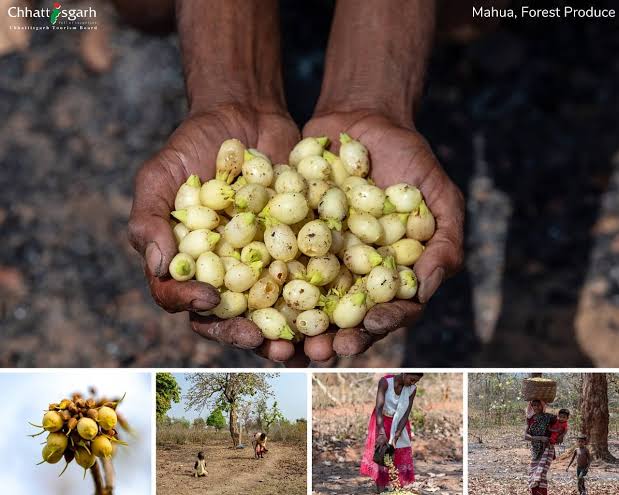
The Chhattisgarh government has initiated plans to develop a structured industry around mahua-based heritage liquor, aiming to strengthen tribal livelihoods, create value from forest resources, and position the traditional beverage as a flagship product of the state.
The initiative received formal approval during a high-level review meeting chaired by the Chief Secretary, who directed officials to classify mahua-based heritage liquor manufacturing units on par with agro-processing industries under the state’s industrial policy framework.
The move is expected to generate new economic opportunities for tribal communities, particularly women engaged in the collection of mahua flowers, a key non-timber forest produce and seasonal source of income across tribal regions.
According to officials, the proposed model will allow private entrepreneurs to establish production units, while the government will facilitate marketing support, licensing assistance, and access to banking services. The Chhattisgarh State Minor Forest Produce (Trading & Development) Cooperative Federation has been designated as the nodal agency for implementing the initiative.
To ensure the viability of the programme, the federation has been tasked with conducting a detailed feasibility study. The assessment will examine the availability of mahua across the state, raw material requirements for manufacturing units, supply chain economics, and market demand for heritage liquor products.
The government has also directed officials to study successful models from other states before finalising the framework. Expressions of Interest (EOIs) will be invited from private investors through the Department of Commerce. However, officials clarified that no special subsidies beyond existing industrial policy provisions will be extended. Participating entrepreneurs will be required to disclose procurement rates for raw materials to ensure transparency and fair returns for collectors.
Welcoming the initiative, tribal rights advocate Shubhranshu Choudhary, Convener of the New Peace Process, said that organised production and marketing of mahua liquor could significantly improve incomes within tribal communities.
“Mahua liquor, if produced through tribal cooperatives and supported with marketing, technology, and branding, has the potential to transform the tribal economy while ensuring that profits flow back to the women who collect mahua,” he said.
Choudhary also noted that despite mahua’s deep cultural and economic significance in tribal communities, the sector has historically remained underdeveloped. He suggested that tribal-led organisations could replicate successful cooperative models seen elsewhere in the country if given adequate institutional support.
As part of its broader strategy, the state government is also planning an investors’ summit to attract industry participation and promote mahua-based enterprises.
Traditionally consumed by tribal communities, mahua liquor is produced from fermented mahua flowers and is deeply embedded in the cultural heritage of central India. By formalising the sector and integrating it into the state’s industrial framework, Chhattisgarh aims to create a sustainable value chain around one of its most abundant forest resources while preserving its indigenous heritage.