


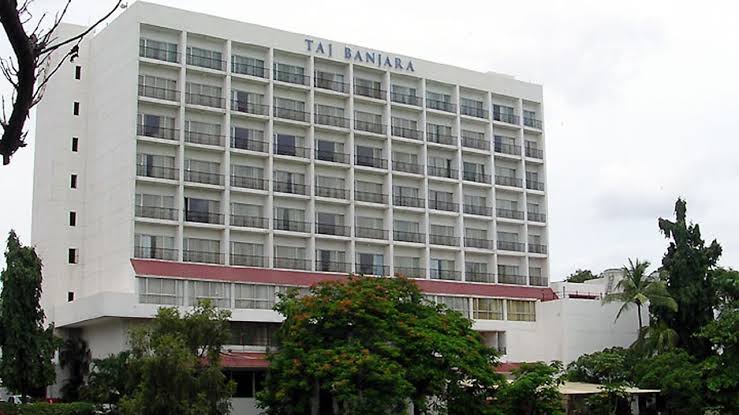
The demolition of the iconic Taj Banjara in Hyderabad’s Banjara Hills marks the end of one of the city’s most recognisable hospitality landmarks, closing the chapter on a hotel that played a significant role in shaping Hyderabad’s luxury hotel industry for nearly four decades.
Demolition of the lakeside property, which ceased operations in 2023 following the expiry of its lease, began in late April and has now progressed to the structural dismantling stage. Contractors associated with the project said the interiors were first stripped of reusable materials, including doors, windows, electrical fittings and fixtures, before demolition of the main structure commenced.
Spread across approximately 3.4 acres overlooking Banjara Lake, Taj Banjara was among Hyderabad’s earliest upscale hotels. Initially managed by the ITC Group before coming under Taj GVK Hotels in 1986, the property became a preferred destination for business travellers, diplomatic delegations, weddings and social events, contributing to the growth of the city’s premium hospitality sector.
The site has since been acquired by Auro Realty for around ₹315 crore. While the developer has not officially announced redevelopment plans, industry sources indicate that a 40-storey high-rise is proposed for the location, reflecting the increasing redevelopment of ageing hospitality assets into high-value mixed-use or residential projects in prime urban markets.
The closure and redevelopment of Taj Banjara also highlight the evolving dynamics of India’s hospitality real estate sector. As hotel operators seek newer, more efficient assets and developers look to maximise the value of prime land parcels, several legacy hotel properties across metropolitan cities are being repositioned or redeveloped to align with changing market economics.
For Hyderabad’s hospitality industry, Taj Banjara’s demolition represents the loss of a landmark that helped establish the city’s reputation as a premium business and leisure destination. At the same time, it underscores the broader transformation of urban hospitality infrastructure, where older properties are increasingly giving way to modern developments designed to meet evolving commercial and real estate demand.
Source : Deccan Chronical