


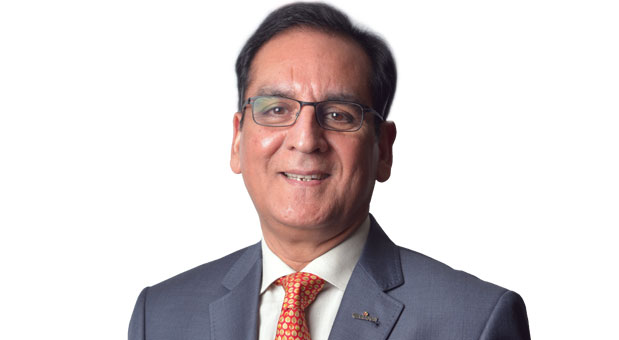
By, KB Kachru President, Hotel Association of India (HAI) and Chairman – South Asia, Radisson Hotel Group
India stands at an important inflection point in its tourism and hospitality journey. The country has the potential to emerge as one of the world’s leading tourism economies, supported by an increasing disposable income, rising domestic travel, improving connectivity and increasing global interest in India as a destination for business and leisure.
However for India tourism to grow, it is imperative to fill the gap between the supply of branded quality hotel rooms which is currently , woefully lesser than the corresponding demand . This requires a review of the business environment in which hotels operate that has not evolved alongside the industry.
Hotels are among the most regulated businesses in the country. A hotel is simultaneously a place of accommodation, food and beverage, employment, entertainment, tourism and, they also serve as venues for conferences and events. This multi-dimensional nature often brings with it a multiplicity of licences, approvals, inspections, taxes and compliance requirements across central, state and local authorities.
The challenge, therefore, is about creating an environment in which investment in hotels becomes easier, faster and more predictable by making investments more attractive.
While substantial work has been done by the government in recent years on the ease of doing business, hotels continue to face multiple issues. Instead of being viewed as a sector that creates jobs across skill sets, and as basic tourism infrastructure, the sector has been labelled as elite . Hotel investments are viewed as investments in real estate by banks that categorise loans for hotel construction as high risk .
Another roadblock in hotel business is the elaborate and complicated licensing and approval framework. Hotels operate under a significantly more complex regulatory framework than other forms of accommodation. According to NITI Aayog’s report on “Unlocking Growth in Tourism and Hospitality Sector”, a hotel project can involve around 50 approvals over its lifecycle, covering everything from land and construction to operational requirements.
The industry would benefit from a genuinely integrated, time-bound single-window system that brings together key approvals and renewals across departments. Digitisation should go beyond simply putting existing forms online; it should create an integrated system where information submitted once can be used across relevant authorities, applications can be tracked transparently and deemed approvals can be considered wherever appropriate.
Ease of doing business is not only about approvals. It is also about what happens after a hotel begins operations. The sector faces a wide range of operational compliances covering labour, fire safety, food safety, environment, excise, municipal requirements, weights and measures, employment and other areas. Many of these are important and cannot simply be removed. The opportunity lies in making compliance smarter.
A risk-based regulatory approach can help distinguish between areas requiring frequent physical inspections and those that can be managed through self-certification, digital reporting or periodic audits.
The principle should be simple: regulation must remain strong where public safety and consumer protection are concerned, but compliance should not become unnecessarily repetitive or fragmented.
Hospitality is one of the country’s most employment-intensive sectors. Every new hotel creates direct employment while generating significant indirect opportunities across transportation, food and agriculture, retail, entertainment and local services. Tourism has the potential to create 25 million new jobs, making hospitality a powerful engine of employment and inclusive economic growth across India.
A more enabling regulatory environment can therefore have an impact far beyond the hotel industry itself.
India’s demographic dividend makes this especially relevant. The sector can provide large-scale employment opportunities for young people while developing skills in areas ranging from culinary arts and housekeeping to technology, management and customer service.WTTC’s latest Economic Impact Research projects global Travel & Tourism growth of 3.2% in 2026, outpacing the wider economy’s 2.4% growth, while supporting 376 million jobs, or one in nine jobs worldwide. Over the next decade, the sector could generate nearly 89 million new jobs, with its GDP expected to grow 3.6% annually, 1.5 times faster than the global economy. Sustaining this momentum will require investment in smart infrastructure, digital innovation, sustainable tourism, skills and cross-border connectivity, with AI and emerging technologies playing an increasing role in improving traveller experiences and operational efficiency.
Policies that support skilling, apprenticeships, mobility of talent and greater participation of women can significantly strengthen this employment engine.
The objective of ease of doing business should not be to reduce the role of regulation. It should be to make regulation more effective.
For the hospitality industry, this means moving towards a model based on trust, transparency, technology and accountability. Industry should be encouraged to comply, while the government should ensure that the regulatory framework is clear, consistent and predictable.
Regular institutional dialogue between government and industry can play an important role here. Mechanisms for identifying regulatory bottlenecks, tracking their resolution and measuring the actual impact of reforms can ensure that ease of doing business remains an ongoing process rather than a one-time exercise.
A coordinated reform agenda across taxation, visa facilitation, licensing, approvals, compliance, infrastructure, destination promotion, sustainability and skilling can unlock significant investment and growth for the hospitality sector.
India’s tourism opportunity is immense. But capturing it requires more than demand. It requires capacity, investment and an enabling business environment. If we can make it easier to build and operate hotels, we can create more rooms, more jobs, more tourism infrastructure and more economic opportunities across the country.