


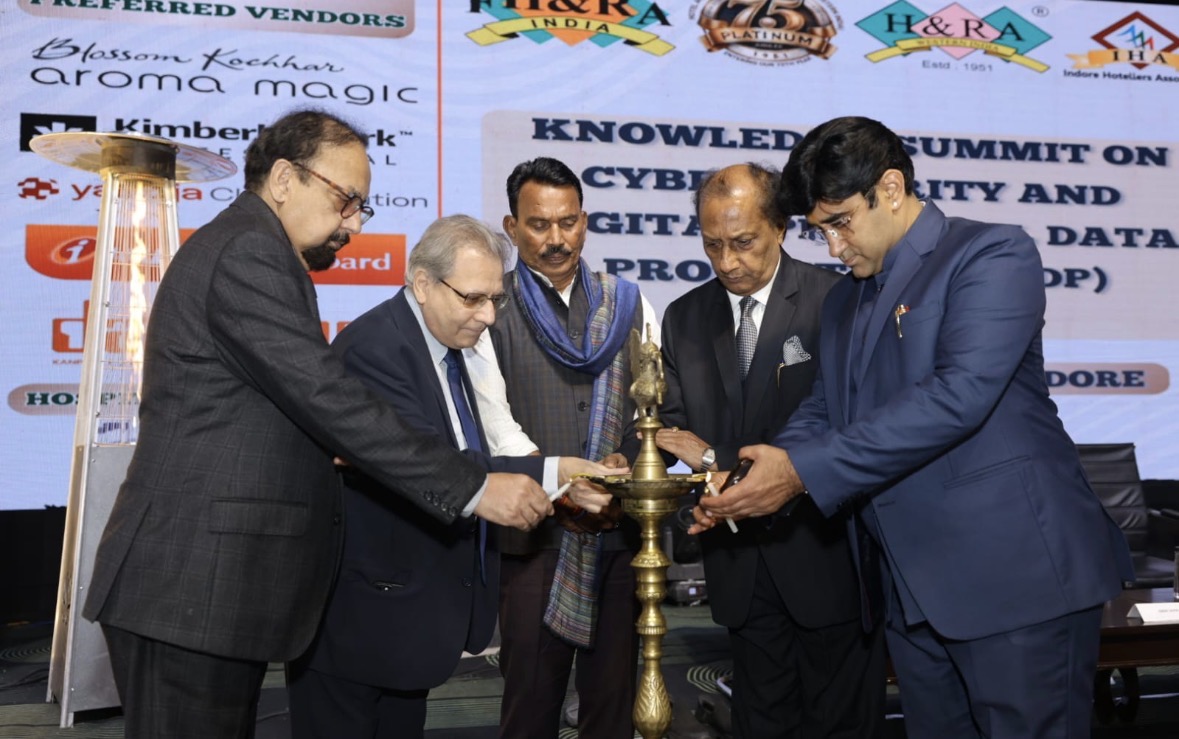
The Federation of Hotel and Restaurant Associations of India (FHRAI), in collaboration with the Hotel and Restaurant Association Western India (HRAWI), concluded an Industry Awareness Summit on the Digital Personal Data Protection (DPDP) Rules 2025 in Indore, underlining the growing importance of data protection and cybersecurity for the hospitality sector.
Held at Omni Residency, the summit focused on helping hotels and restaurants understand the operational and compliance implications of the DPDP Rules 2025, notified under the Digital Personal Data Protection Act, 2023. Discussions centred on sector-specific challenges, preparedness, and the need to embed data governance into everyday hospitality operations, as digital platforms increasingly underpin guest engagement and service delivery.
The event was attended by senior industry leaders including Surendra Kumar Jaiswal, President, FHRAI; Jimmy Shaw, President, HRAWI; Garish Oberoi, Honorary Secretary, FHRAI; and Sumit Suri, Executive Committee Member, HRAWI and President, Indore Hotel Association. Former FHRAI presidents K. Syama Raju and Pradeep Shetty were also present.
Tulsiram Silawat, Minister of Water Resources, Government of Madhya Pradesh, attended as Chief Guest, while Chief Minister Dr. Mohan Yadav addressed the gathering through a video message, highlighting Madhya Pradesh’s tourism potential and announcing incentives of up to 30 percent for large hospitality projects under the state’s tourism policy.
Addressing participants, Silawat said the state had dedicated 2025 to progressive industry policies and emphasised that Madhya Pradesh’s tourism and hospitality framework ranks among the country’s best. He noted that discussions around data protection would help set a new direction for the industry, aligning with the Prime Minister’s vision for tourism-led development.
FHRAI President Surendra Kumar Jaiswal said the DPDP Rules 2025 mark a critical milestone for India’s digital economy, adding that compliance is closely linked to guest trust and long-term sustainability in hospitality. He said the summit helped members better understand their responsibilities and practical steps required to strengthen data governance frameworks.
Jaiswal also highlighted ongoing policy advocacy efforts, including progress on single-window clearances, third-party fire safety audits, abolition of the Eating House Licence requirement in Delhi, and proposals to adopt dry fogging systems as alternatives to anti-smog guns. He added that FHRAI is encouraging hotels and restaurants to procure directly from Farmer Producer Organisations to ensure tourism benefits reach farming communities.
HRAWI President Jimmy Shaw said the DPDP Rules would impact daily hotel and restaurant operations, from front-desk processes and online bookings to vendor management and payment systems. He noted that the summit helped demystify compliance, particularly for small and mid-sized operators, and offered practical guidance on integrating data protection without disrupting service quality.
Key takeaways from the summit included improved understanding of consent and notice requirements, data fiduciary obligations, protection of children’s data, breach preparedness, data principal rights, and compliance responsibilities for significant data fiduciaries. Discussions also addressed risks linked to property management systems, loyalty programmes, payment gateways, AI-enabled services and third-party aggregators.
Concluding the session, Garish Oberoi delivered the vote of thanks, expressing appreciation to the Government of Madhya Pradesh for its progressive tourism policies. Sumit Suri said the state is emerging as a key hospitality destination, supported by incentives and a cooperative policy environment.
The summit reaffirmed FHRAI’s commitment to supporting smooth implementation of the DPDP Rules 2025 and strengthening transparency, accountability and consumer confidence across the hospitality sector.