


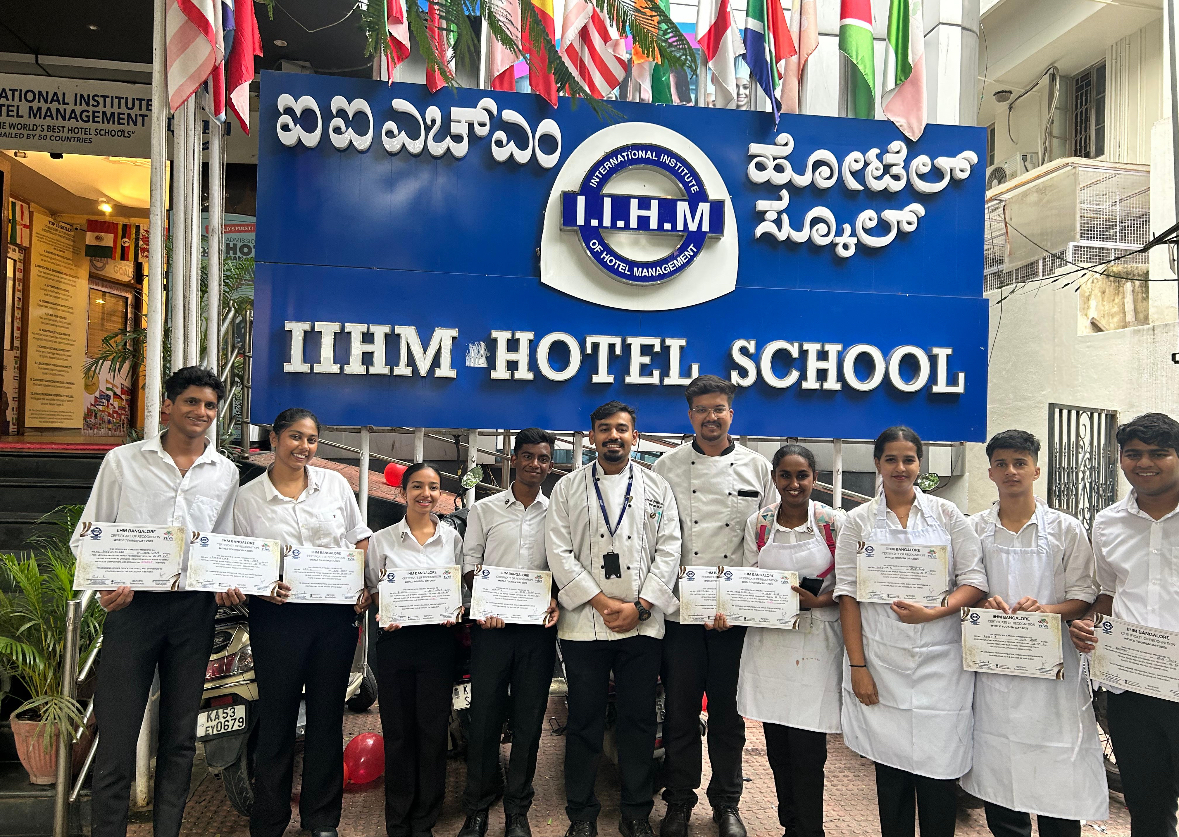
IIHM Bangalore recently hosted an innovative initiative focused on transforming food waste into edible products, reinforcing its commitment to Sustainable Development Goals (SDGs) and eco-friendly culinary practices. The event showcased creative uses of commonly discarded ingredients—such as onion peels, jamun seeds, pineapple peels, watermelon rinds and seeds, pumpkin seeds, and cucumber peels—by converting them through drying, powdering, or repurposing into desserts, starters, and accompaniments.
Sanchari Chowdhury, Director of IIHM Bangalore, highlighted the initiative’s importance:
“As culinary students, we recognize that sustainability is central to our profession. Recycling food waste not only minimizes waste but also brings innovation and value to our kitchens. Most importantly, it teaches us to respect ingredients and understand that sustainability is a responsibility, not a trend. As future chefs and hospitality leaders, it is our duty to embrace these practices, inspire awareness, and prove that culinary excellence can coexist with environmental responsibility.”
The program featured a sustainability-focused culinary competition where around 20 students were challenged to create dishes using ‘basket ingredients’ derived from recycled food items. Over 90 minutes, participants demonstrated innovation, skill, and awareness of eco-conscious cooking, applying lessons central to their curriculum.
Faculty guide Chef Vijaitha emphasized the practical side of the initiative:
“All items, including peels and seeds, are air-dried or cooked again before reuse, ensuring safety and hygiene. This process not only maintains quality but also opens doors to new flavors and textures. Such practices show how food waste can be transformed into valuable, low-cost culinary products while encouraging students to rethink their approach to sustainability.”
Beyond the competition, the event promoted eco-friendly practices such as reducing plastic, replacing cling wrap with paper or jute alternatives, and embedding recycling methods into hospitality operations—reflecting global trends in sustainable food and beverage management.
One participating student described the experience as transformative:
“Creating delicious dishes from ingredients that would normally be discarded taught me the value of creativity and responsibility in cooking. It showed me how small changes in the kitchen can have a significant impact on the environment and help reduce waste.”
With this initiative, IIHM Bangalore reaffirms its role as a pioneer in sustainable culinary education, inspiring future chefs to integrate innovation and responsibility in shaping a greener hospitality industry.