


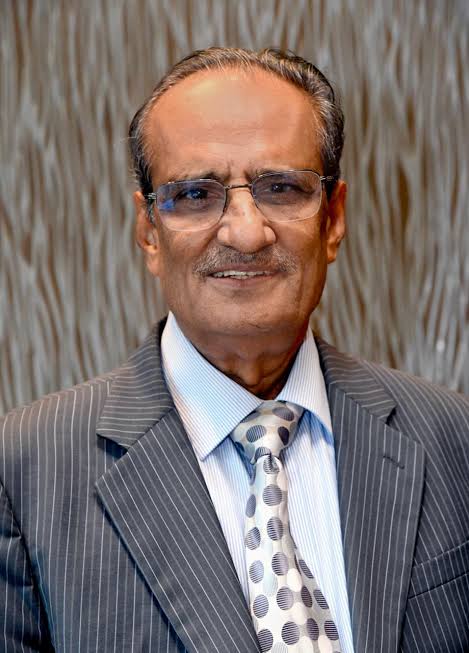
As India focuses on tourism and hospitality to drive economic growth, the Federation of Hotel & Restaurant Associations of India (FHRAI) has become an essential voice in shaping the industry’s future. It represents more than 60,000 hotels and 500,000 restaurants across the country. The organisation has played a crucial role in discussions about policy, including taxation, sustainability, labour welfare, and infrastructure.
With the government aiming for Vision 2047, anticipating that tourism will become a multi-trillion-dollar part of GDP—FHRAI’s leadership is working to connect industry needs with national objectives. In an interview with Asmita Mukherjee, K. Syama Raju, President, FHRAI, talks about the association’s role in promoting policies, its suggestions for regional tourism growth, and the challenges and opportunities facing Indian hospitality.
How is FHRAI working with the government to ensure better policy support for the hospitality and F&B sector?
FHRAI believes that tourism and hospitality do not just represent industries; they are engines of national growth. We collaborate closely with the government at the Central, State, and local levels to identify reforms that can unleash the sector’s potential. For instance, we advocate for simplifying GST to make India more competitive on a global scale. We also push for better business practices through single-window clearances and fair rules for aggregators. Our mission is to bring together the voices of over 60,000 hotels and 500,000 restaurants into meaningful policy discussions. The government has responded positively to many of our concerns, and recent reforms announced by the Prime Minister and the Finance Ministry support this. We view ourselves as partners in India’s Vision 2047 journey, where tourism can significantly increase its contribution to GDP, create millions of jobs, and establish Brand India as a world-class destination. Working together on policy is essential to achieving this goal.
What is the vision behind FHRAI’s proposal to develop model tourist circuits in the Northeast?
The Northeast is one of India’s most beautiful yet underutilised regions. FHRAI aims to develop model tourist circuits there, focusing on inclusivity and regional balance. The plan includes creating integrated circuits for adventure, culture, tea, eco-tourism, and wellness. These circuits will showcase the area’s unique identity and improve connectivity, infrastructure, and livelihoods. We believe tourism should not only thrive in metros or established spots; the Northeast can become a model for sustainable and experiential travel. By establishing these model circuits, we can offer a guide for other states, supporting local entrepreneurship and hospitality. This proposal aligns with the Government’s Act East policy and Vision 2047 to ensure all regions grow together. With proper investment in infrastructure and marketing, the Northeast can become a rival to the best global destinations, generating significant economic opportunities for local communities.
Why do you believe the service charge should be seen as a labour welfare tool?
At its core, the service charge is not a tax or an arbitrary fee; it is a system designed to benefit those who create the hospitality experience: our staff. It ensures that waiters, kitchen staff, and other frontline workers share in the establishment’s success. Unlike tips, which vary, service charges are clear, documented, and fairly shared. This mechanism is vital for a sector that employs many youth and women. Removing or undermining it would hurt the financial security of thousands of workers. FHRAI believes that a motivated team is key to quality service, so measures supporting employee welfare also enhance the guest experience. In a labour-intensive field like ours, recognising service charges as a structured welfare method is fair and necessary for sustaining livelihoods and encouraging talent retention.
How would moving 3-star and above hotels to the ‘Green Category’ benefit the industry?
Sustainability is now essential to the future of hospitality. By moving hotels with 3 stars or more into the ‘Green Category,’ we encourage the adoption of eco-friendly practices in energy, water, and waste management. This change has two key benefits. First, it positions India as a responsible tourism destination, which is crucial for attracting international travellers who prioritise sustainability. Second, it helps the industry by lowering operating costs, increasing efficiency, and preparing businesses for environmental challenges. Many FHRAI members are already leading in areas like solar power, rainwater harvesting, and zero-plastic operations. A Green Category framework would further acknowledge and standardise these efforts. It would also align with India’s broader climate goals, promoting tourism as a growth sector that respects environmental responsibilities. Ultimately, green certification benefits the planet, guests, and hoteliers.
What effect would separating F&B rates from accommodation charges have on both the industry and government revenues?
Currently, linking hotel room rates to GST on food and beverages causes operational confusion and financial stress. For instance, if a room rate exceeds INR 7,500, the GST on F&B jumps from 5% to 18%. This discourages competitive room pricing, complicates compliance, and may frustrate guests. By separating F&B rates from room charges, hotels would gain clarity and flexibility in pricing, allowing for fairer billing for guests. The government would not lose revenue; in fact, it could actually improve collections. By making hotels more competitive, occupancy rates would rise. In many countries, F&B and accommodations are taxed separately, and India needs to adopt this practice to stay competitive globally. FHRAI has strongly advocated for this change as it simplifies operations, lessens disputes, and strengthens the guest experience alongside the government’s tax framework. This policy change would provide long-term benefits for both parties.
What are FHRAI’s main goals to improve the hospitality sector as a source of jobs and economic growth?
Our main goal is to establish hospitality as one of India’s top engines for inclusive growth. This involves three key areas: jobs, investment, and competitiveness. First, hospitality is one of the largest employment sectors, particularly for youth and women. With supportive policies, we can greatly expand this employment base by 2047. Second, every rupee spent in our sector generates 3.5 rupees in output, and each direct job creates over three indirect jobs. Third, we want India to compete globally by simplifying GST, enhancing the ease of doing business, and attracting investments in Tier 2 and 3 cities. FHRAI is also focused on skill development through initiatives like our Institute of Hospitality Management and Centre of Excellence. We aim to create not just jobs but careers that inspire. By developing human capital and enhancing competitiveness, we can ensure that hospitality remains a pillar of India’s economic success.
What are FHRAI’s immediate priorities in communicating industry concerns to policymakers, especially during the current economic situation?
Our top priority is to ensure that the government recognises hospitality as both an economic driver and a job creator. As the economy adjusts, we need policies that reduce friction, lower costs, and build confidence for investors and travellers. FHRAI is advocating for urgent reforms like granting infrastructure status, simplifying GST, establishing single-window clearances, promoting self-certification, and improving last-mile connectivity, especially in Tier II and III cities. These issues significantly impact competitiveness and ease of doing business. We are actively engaging with ministries such as Finance, Tourism, and Commerce, backing our requests with data and global comparisons. Importantly, we frame our concerns within the national context of Vision 2047. This approach helps policymakers see hospitality not as a separate entity but as a vital part of India’s growth narrative. By combining constructive advocacy with viable solutions, we believe our immediate priorities will lead to long-term policy victories for the sector.
Could you share specific areas where you think government action could speed up growth in the hospitality and restaurant sector?
There are several key areas where focused government action can drive immediate growth. First, in taxation, aligning GST rates with those of global competitors would enhance India’s international standing. Second, for licensing, implementing digitised, single-window approvals would significantly cut project delays. Third, in infrastructure, improving connectivity, airports, and urban facilities in Tier 2 and 3 cities could quickly develop new tourism hubs. Fourth, workforce development is essential; aligning government training programs with industry needs will ensure we have skilled workers at every level. Lastly, in sustainability, offering incentives for eco-friendly practices can speed adoption across the sector. FHRAI strongly believes that hospitality should be seen as a strategic sector, not merely a service. With small yet impactful policy changes, India can double tourist arrivals, generate millions of jobs, and draw significant investment. Collaborative government action, alongside industry, is the fastest path to realising the vision of making India the third-largest tourism destination by 2047.
What is the main theme of this year’s FHRAI convention, and how does it connect with current opportunities and challenges in India’s hospitality sector?
This year’s convention theme is FutureScape 2047: Redefining Hospitality for a New India. It reflects both our goals and the transformative journey ahead. We are encouraged to look beyond immediate obstacles and envision what Indian hospitality could become by our 100th year of independence. Today, we face challenges like high GST, infrastructure gaps, and skill shortages. However, we also have tremendous opportunities with rising domestic travel, expanding Tier 2 and 3 markets, digital transformation, and increasing global interest in India. The convention serves as a platform to discuss these dynamics, share solutions, and build consensus on a shared vision. It focuses not only on policy advocacy but also on reimagining hospitality for a changing India and ensuring our sector is ready for the future in a sustainable and competitive way. The theme captures both the present realities and a roadmap for tomorrow’s opportunities.
Can you provide details on key speakers and sessions?
The 55th FHRAI Annual Convention in Bengaluru will feature a diverse lineup of policymakers, industry leaders, and innovators. We are pleased to welcome the Chief Minister of Karnataka, Shri Siddaramaiah, and the Union Tourism Minister, Shri Gajendra Singh Shekhawat, along with several State Tourism Ministers, who will share their visions for India’s tourism strategy. The three-day agenda includes keynote addresses, technical workshops, and panel discussions on important topics such as sustainable tourism, smart infrastructure, digital transformation, and the future of F&B services. Discussions will centre on global best practices, green initiatives, and labour welfare. Importantly, the sessions will foster knowledge-sharing among senior hoteliers, restaurant entrepreneurs, policymakers, and academics. This setup ensures the convention is not only about thought leadership but also about creating actionable strategies to enhance the resilience, inclusiveness, and competitiveness of Indian hospitality.
Will FHRAI’s upcoming convention focus more on policy and advocacy?
Yes, policy and advocacy are key components of the convention’s agenda. The theme “FutureScape 2047: Redefining Hospitality for a New India” highlights the industry’s role in shaping India’s economic future as we approach the centenary of independence. A significant focus will be on aligning hospitality growth with national priorities like Vision 2047, sustainability, and job creation. Sessions will bring together government officials and industry representatives to discuss reforms in labour policies, ease of doing business, and sustainability standards. The convention is an opportunity to present FHRAI’s proposals directly to policymakers. It will also explore future opportunities in digitalisation, green practices, and skill development. Thus, while the event provides networking and learning opportunities, advocacy remains its foundation, making sure the hospitality sector’s voice is heard at the highest levels of decision-making.
Are there plans to make future editions more centred on South India?
South India plays a crucial role in FHRAI’s vision for the hospitality sector due to its rich cultural heritage, natural diversity, and strong tourism potential. Hosting the 55th Convention in Bengaluru reflects our commitment to showcasing South India as a hub for innovation and hospitality excellence. However, FHRAI represents all regions, and our conventions are designed to rotate across the country to ensure inclusivity. Future editions will continue this practice while increasingly emphasising South India’s strengths, including its sustainable tourism models, vibrant F&B culture, and globally competitive hospitality infrastructure. The goal is to use each location to highlight regional strengths while crafting a unified national narrative. Bengaluru’s “FutureScape 2047” sets the tone for how FHRAI will weave local dynamism into a national plan for hospitality growth.