


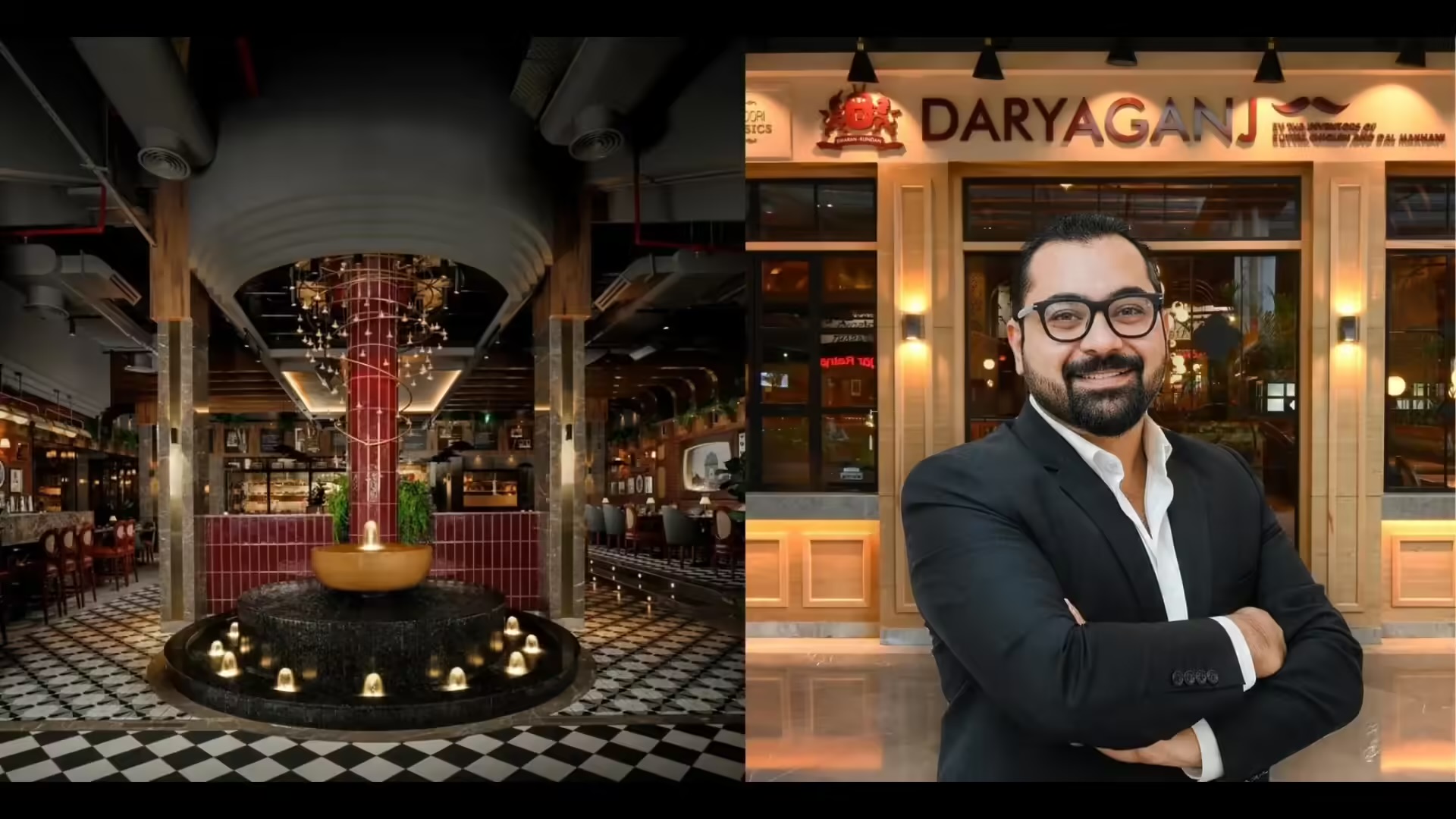
India’s restaurant industry has embraced premiumisation over the past few years. From chef-led tasting menus to experiential dining spaces, consumers are increasingly willing to pay for ambience as much as the food. Yet one category has largely remained outside this transformation: classic North Indian cuisine.
Amit Bagga, co-founder and CEO of Daryaganj believes it is time to change that. With the launch of Daryaganj GOLD, the restaurant chain is betting that Butter Chicken, Dal Makhani and Kebabs deserve the same premium setting that diners have come to associate with modern Indian or global cuisines. The move comes as the company crosses INR 100 crore in annual recurring revenue (ARR) and prepares for its next phase of expansion in India and overseas.
For Bagga, the idea stemmed from a simple observation.
“Classic North Indian cuisine is rarely given a true luxury platform. Most restaurants serving this cuisine operate in casual dining formats, while luxury spaces are usually reserved for modern Indian or global cuisines. We wanted to celebrate India’s culinary techniques and culture in a more elevated way,” he said.
That thinking has shaped every aspect of the new format. At Daryaganj GOLD, the kitchen is not hidden behind closed doors. The tandoors take centre stage, finished in gold plating, while the restaurant itself is designed as a 150-seater with spacious private dining rooms, a scale the brand had never attempted before.
The decision was driven as much by customers as by market opportunity. Existing Daryaganj outlets, Bagga said, had simply become too small for growing demand.
“Guests were constantly asking for larger tables and spaces to celebrate together. We were often unable to accommodate bigger groups because demand exceeded our seating capacity. Daryaganj GOLD was created so guests no longer have to compromise,” he explained.
Interestingly, the premium concept was first introduced in Bangkok before arriving in India. The international launch allowed the company to experiment with local ingredients while retaining the brand’s identity.
“The idea was never to change the cuisine, but to express it in a way that respected both the local context and our brand’s values,” Bagga said.
That flexibility will continue to define Daryaganj’s overseas expansion. Rather than pushing a single format across markets, the company plans to tailor its offering based on local consumer preferences. “Whether we introduce Daryaganj GOLD or our regular format will depend entirely on the location, the country and what the market demands,” he said.
The company’s growth story has been built less on rapid expansion and more on repeat customers. Every outlet has remained profitable, while same-store sales have grown consistently over the past seven years.
Bagga points to the Aerocity restaurant, which is also the brand’s first outlet stating that at the moment, the outlet generates nearly 180% of the revenue it recorded in its opening year.
“Customer experience has been our biggest growth driver. It has translated into strong guest loyalty, repeat visits and sustained growth across all our restaurants,” he said.
Institutional funding has also played a role in preparing the business for scale. Backing from ANICUT Capital, Daryaganj’s first institutional investor, has helped strengthen operations, hiring and internal systems as the company gears up for expansion.
Maintaining consistency across locations, however, remains a priority. From standardised recipes to tightly managed sourcing, the company has invested heavily in processes that ensure diners receive the same experience regardless of where they visit.
Down the line, Daryaganj expects to grow revenue by at least 25% to around INR 125 crore next financial year. Its immediate focus remains Delhi NCR and North India, with Mumbai and Bengaluru on the horizon.
However, Daryaganj GOLD is about more than opening another premium restaurant, for Bagga. It is an attempt to shift perceptions around one of India’s most familiar cuisines.
“We want classic North Indian dining to stand confidently alongside any modern dining concept. Whether it’s a young diner or an international guest, choosing a traditional North Indian restaurant should feel just as aspirational as choosing any global dining destination,” he said.
As India’s premium dining market continues to evolve, Daryaganj is making a case that heritage cuisine simply needs a stage worthy of its legacy.