

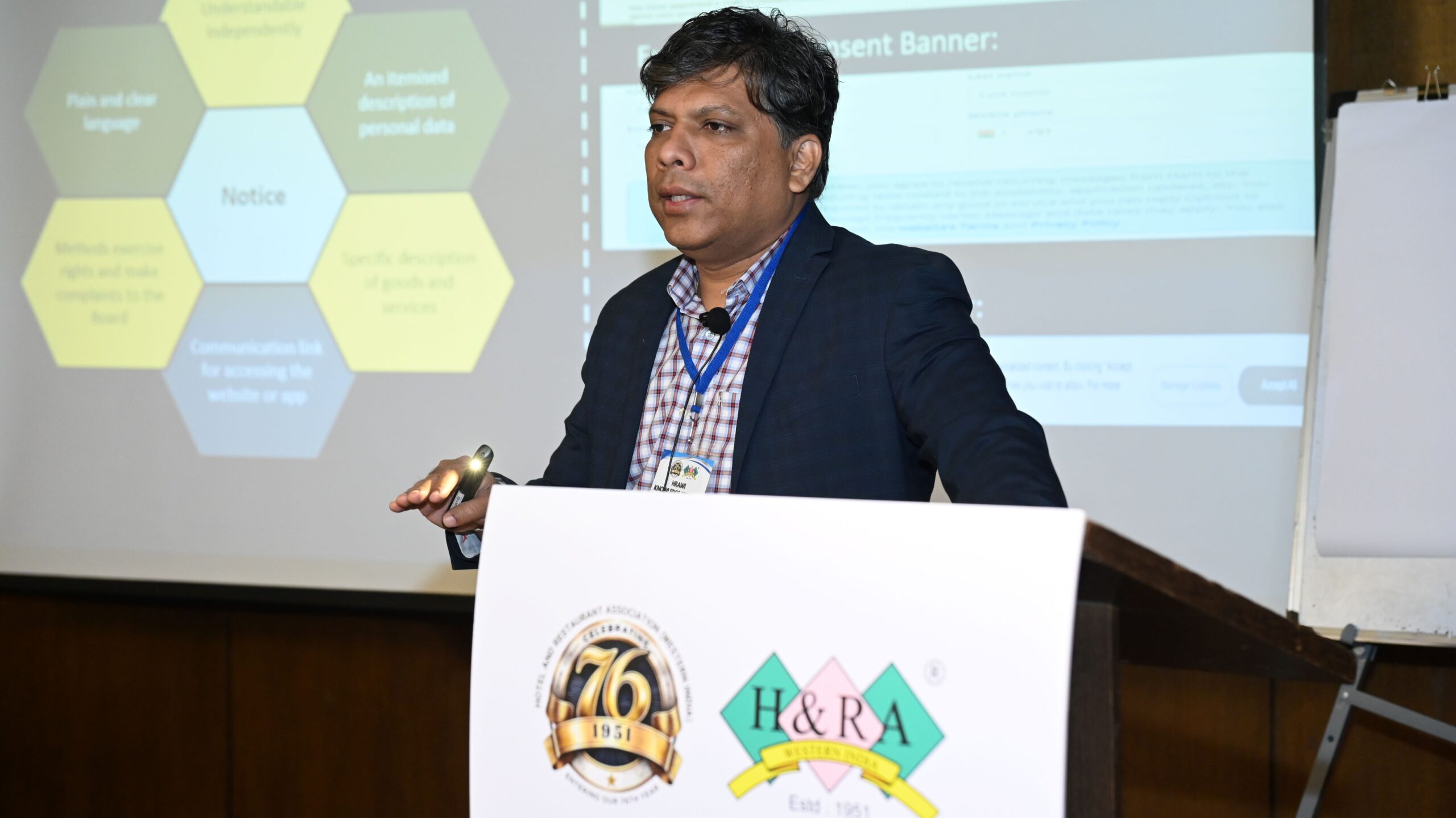
The Hotel And Restaurant Association of Western India (HRAWI) conducted its Knowledge Series – II, bringing together industryexperts and stakeholders to discuss critical regulatory developments shaping the hospitality sector.
Focus on Evolving Compliance Landscape
The session covered key areas including the Digital Personal Data Protection Act (DPDP) Rules, GST updates, Labour Codes, and the Maharashtra Tourism Policy 2024. The initiative aimed to equip hospitality professionals with actionable insights to navigate increasing compliance requirements and policy changes.
Data Protection Takes Centre Stage
The opening session by Abhijit Parab of Ernst & Young highlighted the growing importance of data privacy in hospitality operations.
The discussion emphasised strengthening consent mechanisms, enhancing cybersecurity frameworks, and establishing robust breach response systems. With hotels handling extensive guest data across booking and service touchpoints, compliance with DPDP norms was positioned as essential for maintaining consumer trust and brand credibility.
GST Changes Demand Strategic Recalibration
The second session, led by Akshit Saraogi, focused on recent GST changes and budget amendments.
Experts outlined challenges around input tax credit (ITC), pricing strategies, and compliance requirements. The discussion highlighted the need for accurate tax classification, timely filings, and strategic planning as businesses navigate between 5% and 18% GST regimes, each with distinct margin implications.
Labour Codes Bring Structural Shifts
A session by Anshul Shukla and Siladitya Dasgupta examined the impact of the new labour codes effective from late 2025.
The reforms consolidate multiple labour laws into a unified framework, introducing changes in wage definitions, expanding social security coverage, and tightening compliance norms. Hospitality businesses were advised to review HR policies, wage structures, and workforce classifications to align with the new regulations.
Tourism Policy Opens Investment Opportunities
The final session by Nikhil Padhye highlighted opportunities under the Maharashtra Tourism Policy 2024.
The policy is expected to boost infrastructure development and investment through incentives such as capital subsidies, SGST reimbursements, and support for large-scale tourism projects. It also underscores sustainability and regional development as key focus areas for the state’s hospitality ecosystem.
Strengthening Industry Readiness
Ernst & Young served as the official knowledge partner for the series, which is conducted monthly across western India.
Concluding the session, Gurbir Singh Bedi noted that the strong participation reflects the industry’s commitment to staying ahead of regulatory changes. He emphasised that such initiatives play a vital role in building a resilient and future-ready hospitality sector.