


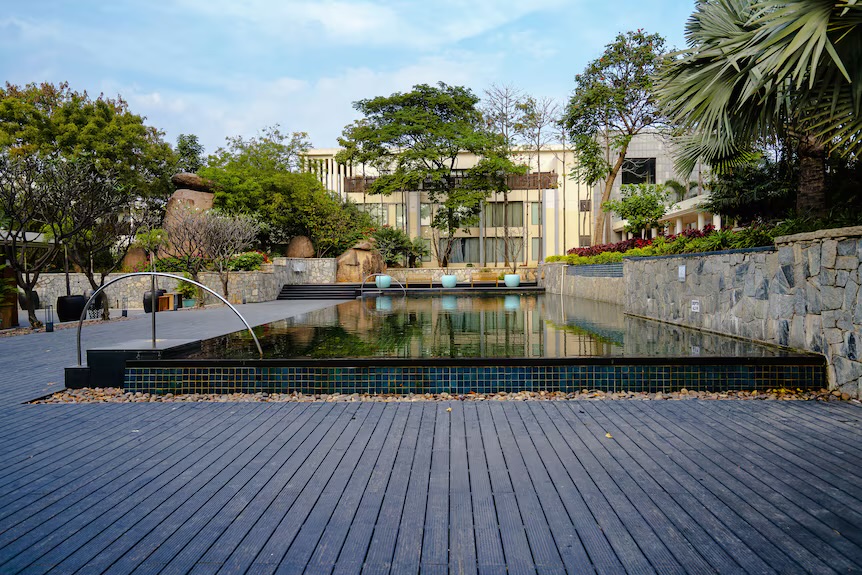
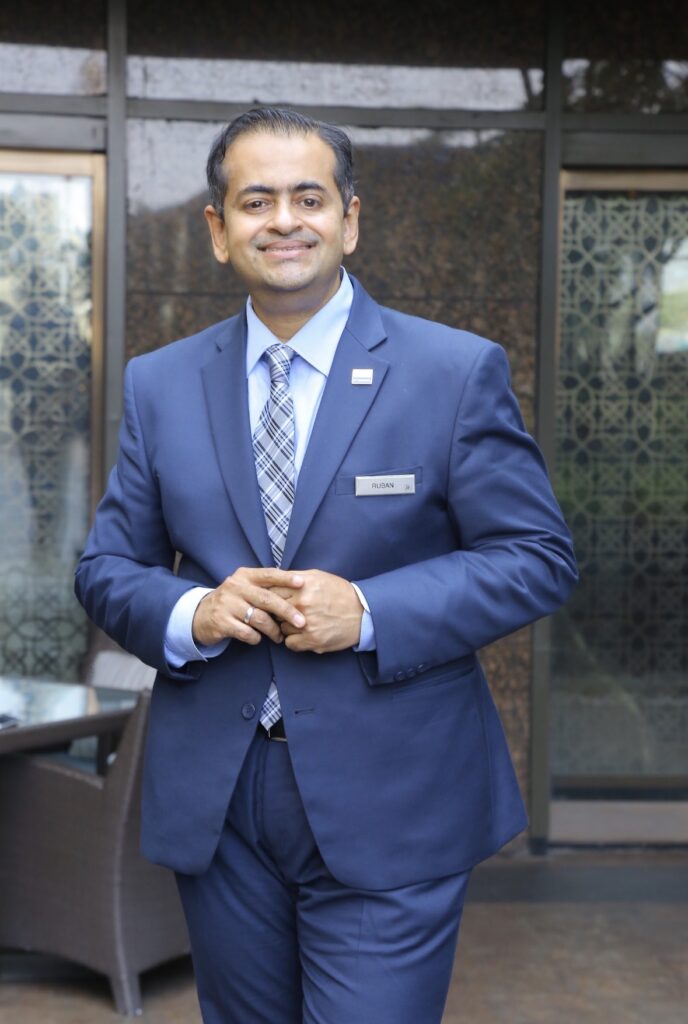
Hyatt Hyderabad Gachibowli is stepping up its focus on F&B, weddings, social events and leisure business as it undergoes a phased renovation and expands its banquet facilities. Ruben Das, General Manager, Hyatt Hyderabad Gachibowli, who took charge of the property earlier this year, is looking to strengthen the hotel’s positioning in Hyderabad’s competitive Gachibowli market by leveraging its open spaces, distinctive dining concepts and wellness offering. In a conversation with Asmita Mukherjee, he outlines his strategy for the property and the opportunities he sees in Hyderabad.
You have spent over two decades in the hospitality industry. Could you tell us about your journey?
I started my career with Hyatt in 2002, so it has been about 24 years in the industry. Hyatt has been my longest association and this is my fourth Hyatt property. I have also worked with brands such as Hilton and Accor. Before this assignment, I was with Hyatt Regency Chennai, which I joined post-COVID and worked with for four years.
Here, one of my key responsibilities will be to oversee the hotel’s transformation as we move through the renovation programme.
Having worked in markets such as Kolkata and Chennai, how do you see the opportunity in Hyderabad?
The best part about Hyatt Hyderabad Gachibowli is that it is not a cookie-cutter hotel. Every Hyatt property has its own story, and this hotel has a very distinct one.
Our story has three pillars. The first is the way the hotel is built. We call ourselves an urban oasis because we are deeply connected to nature. In the middle of a concrete jungle, having this much open space makes a difference.
The second pillar is our dining experience. Every outlet has its own identity, rather than being a predictable hotel restaurant. The third is wellness. We have a jogging track around the hotel, about 200 varieties of indigenous trees and a wild garden where different sections have their own character.
These three pillars are what we want to build the business around.
Gachibowli has several corporate and luxury hotels in close proximity. What is your key differentiator?
It is our sense of space and our connection with nature. Many hotels in this area are single-building properties where everything is contained within one structure. Here, one can get a very different experience.
We have open spaces, a sense of balance and distinct dining experiences. You can have a couple sitting at one table, a father and son at another and a group of friends at another, all enjoying the same garden environment.
For me, the real USP will be when guests start identifying this as their own place. If someone can come here after work, relax, enjoy the garden and feel comfortable, then we have created something meaningful.
Who are your key customer segments and what is the typical length of stay?
Since we are located in a financial district, our weekday business is largely driven by corporate travellers, while weekends see more leisure business.
We also cater to groups, including social and wedding groups, and this will become more important as we expand our banquet facilities. We see an opportunity with large family and destination wedding groups, associations and exhibitions, particularly over weekends.
Our average length of stay is around two-and-a-half to three days, which is slightly higher than the two-day average you would normally see for a city hotel.
F&B is a significant part of hotel ancillary revenue. How are you looking at its growth?
F&B currently contributes around 30% of our revenue, while rooms contribute about 70%. Coming from an F&B background, my aspiration would be to move towards a 50:50 contribution over time.
But the starting point is not revenue. It is creating value for the customer. We are in business to make money, but Hyatt’s DNA is about care, and we want to create value through authentic experiences.
Our F&B philosophy is to keep things simple, wholesome, easy to share and recognisable. We don’t want to confuse guests with food that is so innovative that they don’t understand what they are eating.Food is connected to memories. People remember the food they grew up eating. I want guests to come here, enjoy their food and leave with a good memory of the experience.
You recently launched 4 Note Gardens. What is the idea behind the concept?
4 Note Gardens came from a simple observation, the surrounding environment is full of glass-and-steel buildings and most people spend their day in air-conditioned spaces. We wanted to create a place where people could genuinely spend time outdoors.
It is not just an indoor restaurant moved outside. The food is casual and easy to eat, and the environment is relaxed. We see families, youngsters and guests with pets. We are pet-friendly and have two outdoor restaurants where pets are welcome.
We want people to take their time. You can come in comfortably, sit on a sofa, read a book, have a coffee or enjoy a pizza. The idea is slow food rather than fast food. We want guests to spend two to two-and-a-half hours here without feeling rushed.
What kind of programming are you planning for 4 Note Gardens?
For us, entertainment is important, but we don’t want it to feel like a nightclub. We are looking at live bands, percussionists, storytelling and stand-up comedy, along with retro and lounge music.
We also want to introduce pottery workshops, children’s art and craft activities and sundowner events. One of our aspirations is to even have a party with pets, where guests can bring their pets and enjoy the experience together.
The focus is on socialising rather than binge drinking. We prefer a relaxed format with sangrias and tall drinks rather than shooters. The idea is to have a conversation, enjoy the weather and leave feeling refreshed.
Wellness is another important part of the property. How are you approaching it?
Wellness starts with the food itself. Unlike the conventional hotel breakfast buffet, we offer an à la carte breakfast where food is made to order and served fresh, including for room guests.
It also reduces food waste because guests take what they actually want. We have millet-based options, low-glycaemic-index foods and juices using ingredients such as aloe vera. We also place emphasis on locally produced and artisanal products rather than relying heavily on imported ingredients.
We have also introduced mono and family portions across our restaurants. If a business traveller is dining alone, there is no reason to serve an unnecessarily large portion. It is about being more mindful.
Our spa, The Spa, follows the same philosophy. It is a secluded, therapeutic space and operates by appointment. We don’t want it to become a high-volume operation.
The spa is located in a separate building close to the pool, with its own facilities. One of its distinctive features is natural light. Instead of the conventional dimly lit spa environment, we have floor-to-ceiling windows opening towards the gardens. We want guests to experience their treatment in natural light.
With the renovation and banquet expansion underway, what are your priorities going forward?
The renovation is being carried out in phases and is expected to be completed sometime next year. The banquet facilities are also being expanded, which will strengthen our ability to cater to larger weddings, social events, associations and exhibitions.
At the same time, we want to stay focused on our three pillars: nature, distinctive dining and wellness.
Hotels can become old and newer concepts will always come into the market, but what matters is how well you live your story. My endeavour is to care for our people, our guests and our planet while remaining rooted in authentic service and cuisine.
Our loyal guests come to Hyatt not only because of the physical product, but because of the feeling and authenticity they experience. That is the experience we want to build and sustain here.
Asmita.mukherjee@saffronsynergies.in